2026 Top Metal Shelving Manufacturers for Global Buyers

Time:2026-09-12 Author:Henry
0%

Choosing the right Metal Shelving manufacturer can shape warehouse safety, operating costs, and long-term storage efficiency. In 2026, global buyers face more options than ever. They must compare engineering quality, production capacity, certifications, customization, and after-sales support.

This guide examines leading manufacturers serving international markets. It considers real purchasing concerns, including load ratings, shelf deflection, weld consistency, powder-coating thickness, packaging quality, and replacement-part availability. A reliable supplier should provide clear technical drawings, tested material specifications, inspection records, and transparent delivery terms. Factory visits, video audits, and pre-shipment inspections can reveal details that catalogs often hide. Look closely at corner joints.

The strongest manufacturers are not always the largest companies. Some specialized factories offer better designs for cold storage, retail backrooms, archives, or automated warehouses. Others provide flexible colors, adjustable beams, and modular components for changing inventory. However, supplier data can become outdated, and advertised capacity may depend on installation conditions. That is an important limitation. Buyers should verify every rating with project-specific calculations and independent quality checks when necessary. Price alone remains a weak decision tool. A low initial quote may conceal thinner steel, weaker packaging, or limited technical support. This 2026 overview aims to help distributors, contractors, and warehouse operators make more confident comparisons. It combines practical evaluation criteria with market-focused research, while recognizing that no universal ranking fits every application. Better questions often produce better shelves.
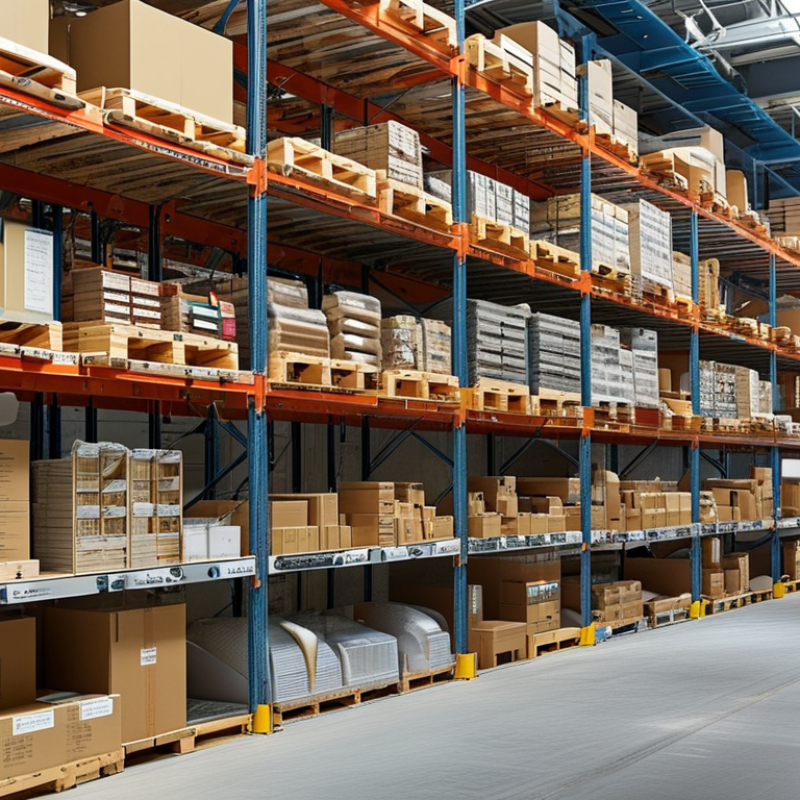
2026 Top Metal Shelving Manufacturers for Global Buyers

What Defines a Leading Metal Shelving Manufacturer in 2026

What Defines a Leading Metal Shelving Manufacturer in 2026

A leading metal shelving manufacturer proves performance before shipment. Its engineers test loaded beams, upright frames, and connection points under repeated stress. Buyers should request test reports, material grades, and clearly stated load limits.

“Heavy duty” means little without measurable data. Details matter.

Reliable production also depends on tight tolerances. A shelf that is three millimeters misaligned can create problems across a tall warehouse bay. Strong manufacturers control welding, punching, coating, and inspection through documented procedures.

They track steel batches and keep replacement parts available. This support reflects real experience, not polished sales language.

In 2026, serious manufacturers design for changing operations. Modular shelves, tool-free adjustments, and recyclable steel can reduce future costs. Digital drawings and installation guidance help international buyers avoid costly mistakes.

However, no supplier is perfect. Paint may show minor handling marks, and delivery estimates can shift during busy seasons. Honest companies explain these risks early and offer practical remedies. That transparency builds trust.

A professional manufacturer also studies the buyer’s environment. Cold storage, humid workshops, retail rooms, and archives need different finishes and layouts. One specification cannot serve every site.

Factory audits, sample approvals, and independent inspections can provide useful evidence before a large order. They cannot replace careful judgment.

Key Types of Metal Shelving for Global Commercial Use

Metal shelving has become a practical backbone for warehouses, retail backrooms, workshops, and archive rooms. The U.S. Census Bureau reported that e-commerce represented 16.1% of total retail sales in 2024. That pressure makes fast picking and flexible storage more important for global buyers.

Selective pallet racking suits heavy cartons and frequent forklift access.

Longspan shelving works better for hand-loaded inventory, spare parts, and boxed goods.

Wire shelving improves airflow and visibility in food-service or clean storage areas.

Cantilever racks handle pipes, timber, and other long materials.

Mobile shelving saves floor space, but its moving parts require disciplined maintenance.

No system is perfect.

According to MHI’s 2024 industry report, supply-chain companies continue increasing investment in automation and digital visibility. Shelving should therefore support barcode scanning, clear aisle access, and future layout changes. Buyers should verify load capacity, beam deflection, anchoring, corrosion resistance, and local seismic requirements. EN 15635 and ANSI/RMI guidance can help structure inspection routines, although local engineering advice remains necessary. A cheap frame may become expensive after repeated relocation. I would not approve a purchase from drawings alone; test-fit the actual cartons, pallets, and handling equipment first.

How to Evaluate Manufacturers, Products, and Quality Standards

2026 Top Metal Shelving Manufacturers for Global Buyers

How to Evaluate Manufacturers, Products, and Quality Standards

Choosing a metal shelving manufacturer requires more than comparing catalogue prices. Examine production experience, engineering capacity, and quality records. A reliable factory should explain its steel grades, forming process, weld inspection, and surface treatment clearly. Ask for recent production photos, not only polished showroom images.

Request a physical sample before placing a large order. Check upright thickness, beam connection fit, shelf deflection, coating coverage, and sharp edges. Measure the sample yourself. Small inconsistencies often appear between drawings and finished products. Load ratings should include test methods, safety factors, and installation conditions. A number without evidence is weak.

Review certificates carefully. ISO 9001 can indicate controlled processes, but it does not prove every shelf is suitable for heavy storage. Depending on the destination market, ask whether designs follow relevant standards such as ANSI MH16.1 or EN 15512. Independent laboratory reports are more useful when they identify the exact model and test date. Traceable batch numbers, inspection records, packaging checks, and clear warranty terms also matter.

Communication reveals capability. Can the manufacturer answer technical questions without vague promises? Can it provide replacement parts, assembly instructions, and corrective-action reports? Be realistic about lead times. Even experienced factories can face material delays or finish defects. I would rather see an honest limitation than an impressive claim that cannot survive inspection. A careful evaluation protects warehouse safety, budget control, and long-term operating reliability.

Major Regional Markets and Leading Supplier Capabilities

Regional demand is reshaping the 2026 metal shelving supply base. North America still values fast installation, high load ratings, and modular storage for warehouses and retail backrooms. The U.S. Census Bureau reported e-commerce sales of about $1.19 trillion in 2024, creating pressure for denser, more adaptable storage. Suppliers serving this market should provide clear capacity labels, seismic options, and replacement parts.

Europe emphasizes energy efficiency, worker safety, and traceable materials. Eurostat reported that 23% of EU enterprises conducted online sales in 2023, supporting continued investment in organized fulfillment space. Regional manufacturers often offer recyclable steel, powder coatings, and semi-automated picking compatibility. However, environmental claims need evidence. A recycled-content statement alone does not prove a lower lifecycle impact.

Asia-Pacific remains the largest manufacturing and logistics center. The Asian Development Bank’s 2024 outlook continued to identify developing Asia as a major engine of global growth, while local buyers increasingly require export-quality inspection. Suppliers here can combine large-scale fabrication with competitive pricing, but quality consistency varies between factories. Middle Eastern, Latin American, and African buyers usually prioritize corrosion resistance, container efficiency, and dependable after-sales service. The World Bank’s 2023 Logistics Performance Index also shows why delivery reliability matters beyond unit price. Buyers should compare load tests, steel thickness, coating reports, packaging photographs, and actual lead times. Cheap shelves can become expensive when one missing beam stops an entire aisle.

2026 Top Metal Shelving Manufacturers for Global Buyers - Major Regional Markets and Leading Supplier Capabilities
Regional Market Primary Demand Segments Common Shelving Formats Typical Shelf Load Typical Bay Load Common Steel and Finish Requirements Key Compliance Expectations Preferred Supplier Capabilities Indicative Export Lead Time
North America Warehouses, retail backrooms, healthcare, workshops, archives Boltless rivet shelving, steel-bin shelving, long-span shelving, mobile archive systems 90–450 kg per shelf 900–2,700 kg per bay Cold-rolled steel; powder coating or galvanized finish for humid areas; adjustable beams and decks Load-rating labels, seismic review where applicable, workplace safety documentation, ANSI/RMI-based engineering for industrial systems High-load engineering, knock-down packaging, replacement parts, bilingual manuals, pallet and container optimization 6–12 weeks, depending on customization and shipment route
Western and Northern Europe Industrial storage, e-commerce fulfillment, offices, libraries, public institutions Clip-in shelving, modular archive shelving, long-span systems, mezzanine-compatible storage 70–350 kg per shelf 600–2,000 kg per bay Cold-rolled steel to EN 10130-type specifications; powder coating; zinc protection for corrosive environments EN 15512 principles for adjustable pallet-racking applications, EN 15635 operational guidance where relevant, CE-related product documentation when applicable Precise tolerances, documented load testing, low-emission coatings, recyclable packaging, technical drawings in metric units 5–10 weeks within established supply routes; longer for engineered projects
Central and Eastern Europe Manufacturing, automotive components, distribution centers, small and medium-sized warehouses Heavy-duty boltless shelving, long-span shelving, archive racks, tire and component storage 100–500 kg per shelf 1,000–3,000 kg per bay Painted or galvanized structural steel; reinforced shelf panels; corrosion-resistant options for industrial use Metric load calculations, factory inspection records, EN-based documentation, occupational safety and installation instructions Automated roll forming, robotic welding, batch traceability, private-label packaging, regional spare-parts support 4–9 weeks for standard products; 8–14 weeks for customized systems
East Asia E-commerce, electronics, light manufacturing, retail, distribution and export logistics Boltless shelving, multi-tier shelving, carton-flow-compatible frames, light and medium-duty racks 50–300 kg per shelf 500–2,000 kg per bay Cold-rolled steel, electrostatic powder coating, galvanized components for moisture exposure Material certificates, load test reports, coating inspection, export packaging and destination-market labeling Large-scale stamping and roll forming, rapid tooling, OEM/private-label production, container-load planning, customization at volume 5–10 weeks after artwork and specifications are approved
South Asia Wholesale distribution, factories, spare-parts storage, retail, institutional procurement Slotted-angle shelving, boltless shelving, heavy-duty racks, multi-purpose warehouse shelving 75–400 kg per shelf 750–2,500 kg per bay Mild steel or cold-rolled steel; powder coating; galvanized finish for coastal or humid locations Load charts, weld-quality records, dimensional inspection, installation and anchoring guidance Flexible minimum order quantities, local-language documents, mixed-container loading, project-based fabrication and field installation 6–12 weeks, subject to production batch and port schedules
Southeast Asia Consumer goods, electronics, apparel, food packaging, third-party logistics Medium-duty shelving, boltless racks, mobile shelving, corrosion-protected warehouse systems 60–350 kg per shelf 600–2,200 kg per bay Powder-coated steel; galvanized or duplex finishes for tropical humidity; reinforced frames for high-cycle use Corrosion testing appropriate to the environment, load testing, packaging moisture protection and safety labeling Humidity-resistant packaging, export documentation, short-run customization, flat-pack design and regional distribution support 6–12 weeks, with additional time for coating or tooling changes
Middle East Logistics, spare parts, construction materials, retail, government and archive storage Heavy-duty shelving, warehouse racks, mobile systems, enclosed and dust-resistant storage 100–500 kg per shelf 1,000–3,000 kg per bay Powder-coated or galvanized steel; UV- and dust-resistant finishes; corrosion protection for coastal zones Fire and seismic design review where required, anchoring details, load signage, corrosion and temperature suitability Engineering for high temperatures and dust, site measurement, installation supervision, spare-part availability and project documentation 7–14 weeks, depending on port, customs and installation requirements
Latin America Retail, automotive service, food and beverage distribution, manufacturing, public-sector storage Boltless shelving, long-span racks, industrial shelving, archive and parts-storage systems 75–400 kg per shelf 750–2,500 kg per bay Painted or powder-coated steel; galvanized options for humid and coastal regions; reinforced shelf supports Spanish or Portuguese technical documents, load ratings, installation instructions and local import documentation Flexible packaging, bilingual support, mixed-SKU orders, regional agents, container consolidation and after-sales parts supply 8–16 weeks, depending on origin, customs and inland delivery
Africa Wholesale, mining and maintenance, aid logistics, retail, agriculture and general warehousing Heavy-duty shelving, basic boltless racks, galvanized storage, modular warehouse systems 75–450 kg per shelf 750–2,500 kg per bay Galvanized or powder-coated steel; reinforced frames; finishes selected for humidity, dust and temperature exposure Clear load signage, simple assembly instructions, corrosion documentation, anchoring recommendations and inspection records Robust low-maintenance construction, flat-pack shipping, field-installation training, spare parts and reliable export packing 8–18 weeks, depending on destination infrastructure and shipping frequency
Oceania Industrial distribution, agriculture, trade supplies, retail, workshops and self-storage Heavy-duty boltless shelving, long-span systems, archive shelving, galvanized outdoor storage 100–450 kg per shelf 1,000–2,700 kg per bay Powder-coated or galvanized steel; corrosion-resistant options for coastal and agricultural environments Load-rating documentation, anchoring guidance, workplace safety information and metric product specifications Marine-grade packaging protection, palletized export shipments, engineering drawings, installation support and replacement components 8–16 weeks, depending on port capacity and domestic distribution
Benchmark note: Load capacities and lead times are indicative industry ranges for common metal shelving configurations, not audited market-share data. Actual ratings depend on shelf dimensions, steel thickness, beam and frame geometry, evenly distributed loading, anchoring, floor conditions, coating specification and local regulations. Buyers should request stamped drawings or certified test reports for project-specific applications.

Ordering, Compliance, Shipping, and After-Sales Considerations

When evaluating 2026 metal shelving manufacturers, global buyers should inspect more than catalog photos. In my sourcing experience, a clear purchase order prevents expensive misunderstandings. Specify steel grade, shelf dimensions, load rating, coating method, carton strength, and acceptable tolerances. Request a pre-production sample. It reveals sharp edges, uneven welds, and assembly problems early. Keep everything documented.

Compliance should be verified before payment, not after arrival. Ask for material declarations, coating information, test reports, and factory quality records. Requirements vary by destination, installation site, and intended load. A credible supplier explains which documents are available and who issued them. Do not accept vague “international standard” language. Check report dates and product-model matches. This step can feel slow. It is cheaper than a rejected shipment.

Shipping terms need practical detail. Confirm pallet dimensions, container loading plans, labeling, spare-part quantities, and responsibility for damage. Photograph packed goods before dispatch. For after-sales support, agree on response times, replacement procedures, and evidence required for claims. Ask how missing bolts or bent posts will be handled. A written warranty helps, but it cannot fix poor communication. I have seen buyers focus on the lowest unit price and overlook storage fees, rework, and delays. That choice deserves reconsideration. Reliable manufacturers welcome technical questions and provide traceable inspection records, though no supplier is perfect.

FAQS

What should buyers evaluate before choosing a metal shelving manufacturer?

Review production experience, engineering ability, steel grades, forming methods, welding checks, and surface treatment. Ask for recent factory photos. Polished showroom images are not enough.

Why is a physical sample important before a large order?

A sample reveals upright thickness, beam fit, shelf deflection, coating coverage, and sharp edges. Measure it yourself. Small differences can matter.

What information should a load rating include?

It should identify test methods, safety factors, installation conditions, and the exact shelving model. Numbers need evidence. A simple capacity label is weak.

Which quality documents should buyers request?

Request process certificates, independent laboratory reports, inspection records, batch numbers, and packaging checks. A certificate alone does not prove heavy-storage suitability.

How can communication reveal a supplier’s real capability?

Ask technical questions about replacement parts, assembly instructions, corrective actions, and delivery delays. Vague promises are warning signs. Honest limitations are more useful.

What storage features are important for North American warehouse buyers?

Buyers often need fast installation, high load ratings, modular layouts, clear capacity labels, and replacement parts. Seismic options may also matter in suitable locations.

What should European buyers check in environmental claims?

Look for evidence about recycled steel, coating materials, energy use, and total lifecycle impact. Recycled content alone proves little. The claim may still be incomplete.

What challenges can buyers face with large-scale regional suppliers?

Large factories may offer competitive pricing and high output, but quality can vary between production lines. Inspect consistently. Cheap shelves can become costly when one missing beam stops an aisle.

Conclusion

This guide to the 2026 top Metal Shelving manufacturers for global buyers explains what distinguishes a reliable supplier in today’s competitive market. It examines manufacturing capacity, engineering expertise, customization options, material selection, load performance, durability, quality control, and production consistency. It also reviews key shelving types for commercial use, including boltless, heavy-duty, mobile, adjustable, and modular systems, helping buyers match products with warehouse, retail, industrial, archive, and logistics requirements.

The article provides a practical framework for comparing manufacturers, products, certifications, testing procedures, and quality standards across major regional markets. It also highlights important considerations when placing international orders, such as technical specifications, packaging, documentation, compliance requirements, lead times, shipping arrangements, installation support, warranties, spare parts, and after-sales service. By evaluating suppliers through these factors, global purchasers can reduce operational risks, improve storage efficiency, and select dependable Metal Shelving solutions that support long-term commercial use.

Henry

Henry

Henry is a dedicated marketing professional with a profound expertise in the company's offerings. With years of experience in the industry, he possesses an impressive understanding of the market dynamics and consumer behaviors that drive success. Henry is committed to sharing his insights through......