A good shelving system should adapt to your life, not force your belongings into fixed spaces. That is the central idea behind this guide to the 7 Best Adjustable Shelving Units for Any Space. From narrow apartment closets to busy garages, Adjustable Shelving can make vertical space more useful. It can also make a room feel calmer, if the design is chosen carefully.
Professional organizer Julie Morgenstern says, “Organizing is not about getting rid of everything you own.” Her advice matters here because flexible storage should support real habits, not create extra work. Adjustable shelves can hold cooking equipment, books, tools, folded clothing, or changing children’s supplies. The right unit should move with those needs.
This guide compares shelf spacing, weight capacity, frame stability, materials, installation, and everyday accessibility. We consider steel racks for demanding garages, wood systems for warmer living spaces, and modular designs for renters. Manufacturer specifications matter. So do warranty details and customer feedback.
Still, no shelf is perfect.
A strong unit may look industrial. A beautiful system may support less weight. Some models claim easy assembly, yet small rooms can make installation frustrating. We address those trade-offs directly, because reliable recommendations need more than attractive product photos. Each option is assessed for practical use, not just appearance. Whether you need a compact bathroom shelf or a heavy-duty workshop system, these selections can help you choose with greater confidence.
What Adjustable Shelving Units Are and How They Work
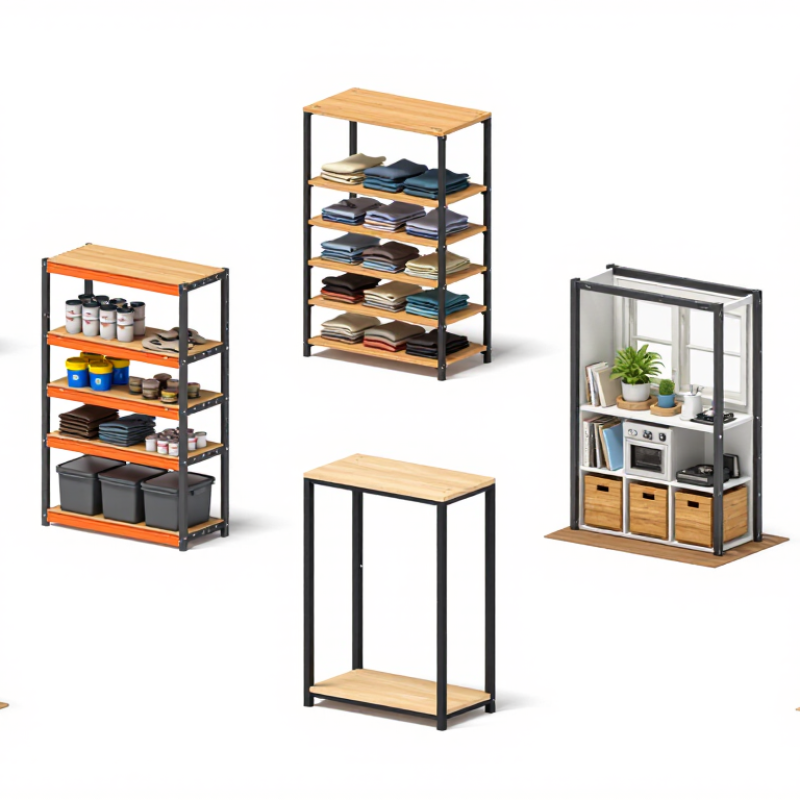
Adjustable shelving units are storage systems designed to change with your needs. They use vertical rails, posts, or side panels with evenly spaced holes. Shelves attach through brackets, clips, or locking pins. Moving these supports changes the distance between shelves. A tall opening can hold a vase or storage bin. A shorter opening suits books, tools, or folded clothing.
The basic mechanism is simple, but safe setup matters. Each shelf transfers weight to its brackets, then into the vertical supports and floor. Check the stated load rating before placing heavy items. Weight should remain evenly distributed, especially on wide shelves. Wall-mounted systems need suitable anchors for the wall material. Freestanding units may require an anti-tip connection in homes with children or pets.
In practical use, adjustment takes only a few minutes. Remove the shelf, reposition both brackets at the same height, and reseat the shelf firmly. I once measured storage gaps by eye, and one shelf sat slightly unevenly. That small mistake made containers slide forward. A tape measure prevents it. Adjustable systems also need occasional inspection. Loose hardware, bent brackets, or overloaded shelves can reduce stability. The most useful design is not always the largest one. It is the unit that leaves enough room for changing objects without wasting floor space.
Key Features to Compare Across Seven Shelving Units
7 Best Adjustable Shelving Units for Any Space
Key Features to Compare Across Seven Shelving Units
Adjustable shelving units solve different storage problems, from narrow laundry corners to busy workshops. When comparing seven options, measure the available width, depth, and ceiling height first. A shelf that fits on paper may block a door or leave wasted space. I also check each unit’s weight rating, not just its appearance. One shelf may hold 200 pounds evenly, while another supports far less on a single level.
Shelf adjustment is a major difference. Some systems move in small increments, which helps balance jars, tools, or tall cleaning bottles. Others offer fewer positions but assemble faster. Look for strong brackets, secure locking pins, and shelves that resist bending. Steel frames suit heavier loads, while resin or composite shelves handle damp areas with less maintenance. A level base matters too. Uneven floors can create wobble, even with a sturdy frame. It happens.
I test assembly time and examine the instructions carefully. Clear diagrams reduce mistakes, although some manuals still assume too much. Tool-free designs are convenient, but tight connections can be harder to inspect later. Consider corner clearance, wheel locks, wall-anchoring options, and the ease of wiping each surface. A glossy coating may look durable, yet scratches can reveal weak protection. I prefer comparing real measurements, published load limits, and user handling notes together. No single feature proves quality.
How to Choose the Right Shelving Unit for Any Space
Choosing the right adjustable shelving unit begins with measuring the space honestly. Record the wall width, ceiling height, and usable depth. Leave room for doors, windows, and walking paths. A shelf that fits on paper may feel crowded in daily use.
Think about what the shelves must hold. Freestanding units suit bedrooms, offices, and rental homes. Wall-mounted shelves save floor space but require secure installation. Corner units use awkward areas efficiently. Rolling shelves help in kitchens or workshops. Ladder-style units add display space without appearing heavy. Wire shelves improve airflow, while heavy-duty frames support tools or storage boxes. Check each unit’s weight rating, adjustment holes, frame material, and shelf stability. Adjustable spacing matters when containers change size.
Tips: Keep heavier items on lower levels. Measure your largest object before buying. Use a level during installation. Leave a small gap behind shelves for cleaning and ventilation. I once chose shelves that were too deep, and the walkway became uncomfortable. That mistake showed me that maximum capacity is not always practical. Consider children, pets, moisture, and sunlight before choosing a finish. Plastic may handle damp areas, while coated metal can suit garages. Wood offers warmth, but it may need more care. A slightly smaller unit can sometimes serve the room better. Use temporary boxes to test the layout before drilling or assembling anything.
Installation and Configuration for Safe, Flexible Storage
7 Best Adjustable Shelving Units for Any Space
Adjustable shelving works best when its installation matches the room. Measure wall width, ceiling height, and floor slope before choosing a unit. Leave enough clearance for doors, vents, and walking paths. A shelf that fits on paper may feel cramped in daily use.
Check the manufacturer’s load rating for every level, not just the frame. Install uprights on a firm, level surface, then tighten each connection gradually. Wall-mounted systems should meet solid studs or approved anchors. Freestanding units need anti-tip straps, especially in homes with children or pets. Place books, tools, and other dense items on lower shelves. Keep lighter containers above them. Stability matters more than maximum capacity.
Small details make configuration safer. Use a spirit level after adding each shelf. Lock adjustable pins fully into matching holes. Keep shelf edges flush, and remove parts that wobble or show cracks. Wire shelves suit damp utility areas, while solid panels protect smaller objects from falling. Rolling units require locked casters during use. I once set a shelf too high for comfortable access, despite measuring correctly. It looked efficient, but daily use proved otherwise. Recheck the layout after a week. Storage habits often change faster than expected.
7 Best Adjustable Shelving Units for Any Space
Typical shelf depth by storage application for safe, flexible installation and configuration.
Shelf depths shown are common planning dimensions in inches: shallow shelves suit closets and offices, while deeper shelves are more practical for garages, utility areas, and archive storage. Always confirm wall anchoring, shelf loading, and manufacturer limits before installation.
Care, Maintenance, and Long-Term Use of Adjustable Shelves
Adjustable shelving lasts longer when its moving parts receive routine care. Wipe dust from shelf clips, rails, and screw heads with a dry microfiber cloth. Moisture can encourage corrosion, especially in laundry rooms or garages. The U.S. Environmental Protection Agency recommends controlling indoor humidity between 30% and 50%, which also helps protect stored materials and metal hardware.
Check every shelf after repositioning it. Confirm that each support is fully seated, then test the shelf with gentle downward pressure. Never treat the maximum load rating as a daily target. Heavy items belong on lower levels. The U.S. Consumer Product Safety Commission reported an estimated 71,300 annual emergency-department injuries involving furniture tip-overs among children under 18 during 2018–2020. Secure tall units to a suitable wall structure, and inspect anchors after moving the furniture. A slightly loose fastener can become a serious weakness.
Tips:
Use matching supports, not improvised pieces. Keep shelves level with a small bubble level. Replace bent clips immediately. Avoid abrasive cleaners.
A common mistake is cleaning visible surfaces while ignoring hidden joints. I still find neglected corners after months of use. That is a useful reminder: long-term care depends on small inspections, not occasional deep cleaning. Recheck the unit after seasonal humidity changes, room renovations, or a major load adjustment.
FAQS
Measure wall width, ceiling height, and floor slope. Leave space for doors, vents, and walking paths. A shelf can fit on paper but feel cramped.
Place uprights on a firm, level surface. Use a small spirit level after adding each shelf. Floors are rarely perfectly level.
Secure tall units to suitable wall structures. Use anti-tip straps, especially around children or pets. Freestanding does not mean risk-free.
Store books, tools, and other dense items on lower shelves. Keep lighter containers above them. Stability matters more than maximum capacity.
Check the load rating for every shelf level. Lock each adjustable pin fully into its matching hole. Test the shelf with gentle downward pressure.
Wire shelves suit damp utility areas because air can circulate. Solid panels help stop small objects from falling. The choice is not always obvious.
Wipe clips, rails, and screw heads with a dry microfiber cloth. Avoid abrasive cleaners and excess moisture. Hidden joints deserve attention too.
Recheck it after moving furniture, changing loads, or renovating the room. Review the layout after one week. Storage habits may change faster than expected. I once measured correctly but placed a shelf too high.
Conclusion
Adjustable Shelving units provide a practical way to organize spaces while adapting to changing storage needs. Their shelves can be repositioned along support posts, allowing users to create more room for tall items or tighter spacing for smaller belongings. When comparing seven options, consider weight capacity, shelf dimensions, materials, adjustability, stability, portability, and ease of assembly. These features help determine whether a unit is better suited for a kitchen, office, garage, closet, or living area.
Choosing the right Adjustable Shelving system begins with measuring the available space and identifying the items it must hold. Safe installation requires a level surface, secure connections, balanced weight distribution, and wall anchoring when appropriate. After setup, shelves should be checked regularly for loosened parts, bending, rust, or damage. Routine cleaning, avoiding excessive loads, and adjusting shelf positions carefully can extend the unit’s useful life. With thoughtful selection and maintenance, adjustable shelves offer flexible, durable storage for almost any space.

 DirectRack