Folding Shelves help homes, workshops, retailers, and hospitality spaces reclaim floor area as storage needs change. Their value depends not only on compact folding, but also on load capacity, hinge design, surface finish, and installation method. A shelf that looks sturdy in a product photo may behave differently under repeated use. Details matter.
For global buyers, China offers a broad manufacturing base, from standard wall-mounted units to customized metal, wood, and plastic designs. Comparing suppliers takes more than reviewing catalog images. Buyers should request material specifications, dimensional drawings, packaging details, production lead times, and relevant quality records. These checks can help show whether a manufacturer is equipped to handle samples and maintain consistency at scale.
This guide explores how to assess China-based Folding Shelves manufacturers, compare product capabilities, and identify useful questions before placing an order. It also considers customization, communication, quality control, and shipping preparation, all of which can affect costs and delivery. No single supplier suits every project. A low quote may look attractive, but unclear tolerances or weak packaging can create problems after arrival. Specifications reduce guesswork, though they cannot replace independent checks or clear written agreements. Some details remain uncertain until samples are handled. Use this overview as a starting point, then verify supplier claims against your product requirements and procurement process.
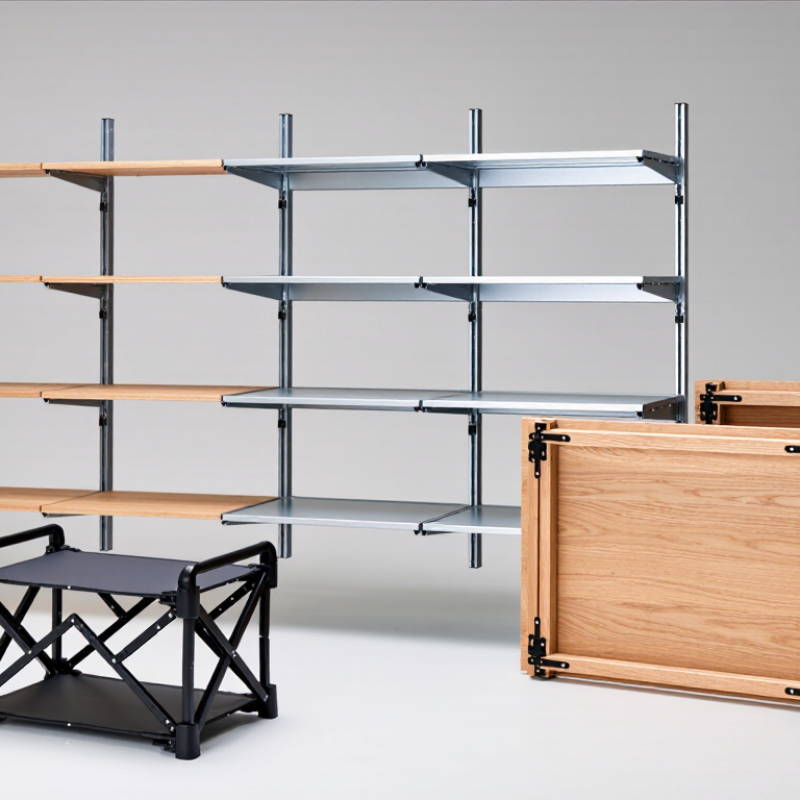
China’s folding-shelf industry draws on a broad supply base for steel, aluminum, coatings, and hardware. Cold-rolled steel is common for rigid frames and shelf panels; aluminum can reduce weight, though it may require careful reinforcement at hinges. Manufacturers typically cut, punch, bend, weld, and finish components before assembly. Powder coating adds a durable surface, but coating thickness and edge coverage deserve inspection.
National output gives context, not a shelf-specific capacity figure. World Steel Association’s World Steel in Figures 2025 reports that China produced about 1.005 billion tonnes of crude steel in 2024. That scale supports extensive material availability, but it does not prove that any individual factory can meet a buyer’s order or quality targets. Ask for production schedules, material specifications, and inspection records.
Automation is another useful indicator. The International Federation of Robotics reported 276,288 industrial robot installations in China in 2023, around 51% of global installations. Still, shelf production depends on practical details: hinge alignment, weld consistency, and repeatable load testing. Small defects matter. A polished sample may not reflect every production batch, and that is worth checking. These figures describe China’s wider manufacturing base, not folding-shelf output specifically.
For global buyers, a load rating means little without the test setup behind it. Ask whether the figure applies to one shelf or the full unit, and whether the load was evenly spread. A 20-kilogram rating with books across the panel is not equivalent to the same weight concentrated near the front edge. ANSI/BIFMA X5.9-2019 offers durability and stability test methods for storage units, but it is not a universal folding-shelf rating. Treat it as a reference, not automatic proof of compliance.
Steel gauge needs similar care. The American Iron and Steel Institute’s sheet-steel gauge tables put 18-gauge steel at about 1.2 mm and 16-gauge at about 1.5 mm; values vary by material specification. Ask suppliers to state measured thickness, including whether coatings are counted. A thicker panel may resist bending, yet weak hinge plates or thin mounting brackets can still limit the whole shelf.
Fold-cycle claims are easy to misread. Request the test load, cycle count, mounting surface, and failure criteria, plus the original report rather than a marketing summary. BIFMA methods can inform durability checks, but buyers should confirm whether a particular folding mechanism was tested under them. Look for loosened pins, cracked welds, and sagging after repeated use. I would still inspect a sample: a tidy spreadsheet cannot reveal every rough hinge or uneven wall fit.
China Top Folding Shelves Manufacturers for Global Buyers
For global buyers, EN 16121:2023 and EN 16122:2012 offer useful safety and durability benchmarks. EN 16121 sets requirements for non-domestic storage furniture, while EN 16122 describes test methods for assessing strength, durability, and stability. Buyers should check whether the standards’ scope fits the specific folding shelf and its intended use. A wall-mounted display shelf may face different demands from a mobile unit in a busy stockroom.
Ask suppliers for test reports that identify the model, configuration, loading conditions, and test results. During evaluation, look closely at hinge movement, locking parts, and shelf deflection under load. Repeated opening and closing can reveal loosened joints or awkward catches. A standard test is useful, but it cannot represent every installation or user habit. That limitation deserves attention. Confirm the shelf’s stated load capacity and mounting instructions, and compare them with your actual use. Independent testing can add confidence, but documentation should still match the product being purchased.
Tips: Request reports tied to the exact model. Check fasteners after cycling tests. Consider uneven loading, too; real users are not always careful.
This chart shows the edition years identified in the standards’ references, not product test scores. EN 16121 specifies safety, strength, durability and stability requirements for non-domestic storage furniture; EN 16122 sets out test methods for assessing these characteristics. Buyers should check that a product’s intended use and test evidence align with the applicable standard.
For folding shelves, a certificate is a starting point, not proof that every batch is consistent. The ISO Survey 2022 reported 1,265,216 valid ISO 9001 certificates worldwide across 189 countries and economies. That scale shows how widely the standard is used, but it does not verify a specific factory’s shelf design or production line. Buyers should confirm the certificate’s scope, issuing body, and current status.
Walk the factory floor. Check whether operators follow documented steps for hinge installation, weld inspection, surface coating, and final packing. Ask to see inspection records for shelf dimensions and load testing, then compare them with the approved product specification. Look closely at sample shelves: uneven coating or a hinge that binds can signal process drift. Small details matter. ISO 19011:2018 provides guidance for auditing management systems, including planning, evidence gathering, and reporting findings.
A useful audit tests records against actual work. Trace one finished unit back to its material lot, production checks, and inspection result. Interview staff doing the work; a tidy binder cannot answer every question. Still, a short visit can miss problems hidden by seasonal workloads or subcontracted processes. Request corrective-action records and follow up on unresolved findings before approving repeat orders. The audit should leave clear evidence, not just reassuring impressions.
A 1,200 × 1,000 mm pallet gives folding-shelf exporters a clear footprint for planning cartons, loading, and freight. The useful question is not just how many cartons fit. It is whether folded frames, shelves, and protective corners sit securely without overhanging the pallet. Even a small overhang can catch during handling. That detail matters.
Before confirming a packing pattern, measure the packed product, not only the shelf itself. A carton’s external dimensions include padding and seams, which can change the row layout. Test a sample pallet with the actual cartons, then record its total height and gross weight. Keep the load stable. If cartons vary slightly, leave room for that variation rather than relying on a perfect drawing.
Pallet dimensions also affect how many units fit into a container or other freight space, but they do not determine the answer alone. Door openings, usable internal dimensions, weight limits, and the carrier’s handling rules all matter. Ask the freight provider to check the proposed load plan before production packing begins. A spreadsheet can look convincing and still be wrong. I would also photograph the trial stack and note where straps or corner boards are placed; this makes the packing method easier to repeat, though it will not replace a real loading check.
No. Check its scope, issuing body, and current status. A certificate is only a starting point.
Watch hinge installation, weld checks, coating, and packing. Compare inspection records with the approved shelf dimensions and load tests. Small details matter.
Trace one finished shelf to its material lot, production checks, and inspection result. Ask operators how they perform each step.
Not always. Seasonal workloads or subcontracted work may hide issues. I would not treat one clean visit as proof.
Request corrective-action records and follow up before repeat orders. A tidy binder alone is not enough.
It provides a defined footprint for carton and freight planning. Check that folded frames and protective corners do not overhang.
Measure the packed carton’s outside dimensions, including padding and seams. Test the actual cartons on a sample pallet.
No. Door openings, internal space, weight limits, and handling rules also affect the load. Ask the freight provider to review the plan.
Record pallet height and gross weight. Photograph the stack and note strap and corner-board placement. A real loading check still matters.
This guide explores the capabilities of China’s Folding Shelves industry, including common materials, manufacturing processes, and production capacity. It explains how buyers can compare load ratings alongside steel thickness and fold-cycle test results, helping them assess whether a shelf is suited to its intended use. The article also outlines how EN 16121:2023 and EN 16122:2012 can inform safety and durability evaluations, while emphasizing the importance of checking applicable requirements for each product and market.
To evaluate suppliers, the guide recommends reviewing ISO 9001:2015 quality-management documentation, conducting factory audits, and confirming that production controls match the buyer’s specifications. It also considers export logistics, showing how 1,200 × 1,000 mm pallets can affect carton dimensions, pallet configuration, container utilization, and freight planning. Together, these points offer global buyers a practical framework for comparing products and suppliers from initial assessment through shipment preparation.

DirectRack