Retail stores are under pressure to refresh displays, improve product visibility, and control installation costs. The National Retail Federation’s 2024 forecast projected U.S. retail sales between $5.23 trillion and $5.28 trillion. That growth increases demand for flexible fixtures, especially in fast-changing categories such as apparel, electronics, cosmetics, and accessories.
Slatwall Displays offer adjustable merchandising without rebuilding an entire wall. Hooks, shelves, baskets, and face-outs can move across horizontal panels within minutes. A small shop can create a bright launch zone near the entrance, then convert it into a clearance section later. This flexibility matters for global buyers managing different store formats. Grand View Research’s retail shelving analysis identifies modularity, space efficiency, and easy reconfiguration as important market drivers. The report does not isolate Slatwall Displays, however. That limitation deserves attention.
China has become a major sourcing base for retail fixtures, but factory selection requires more than a low quotation. Buyers should review panel density, laminate adhesion, edge finishing, hardware load ratings, packaging design, and repeat-order consistency. The International Organization for Standardization also emphasizes quality management through ISO 9001, which can support more reliable production controls. In practice, a sample panel should survive repeated hook movement and transport vibration. Small details matter.
This guide examines China Best Slatwall Displays for Global Retail Buyers through a practical sourcing lens. It considers materials, customization, certifications, lead times, quality inspection, and total landed cost. No supplier is perfect. Careful comparison remains essential. The strongest decision combines verified factory experience, clear technical documentation, and evidence from real retail installations.
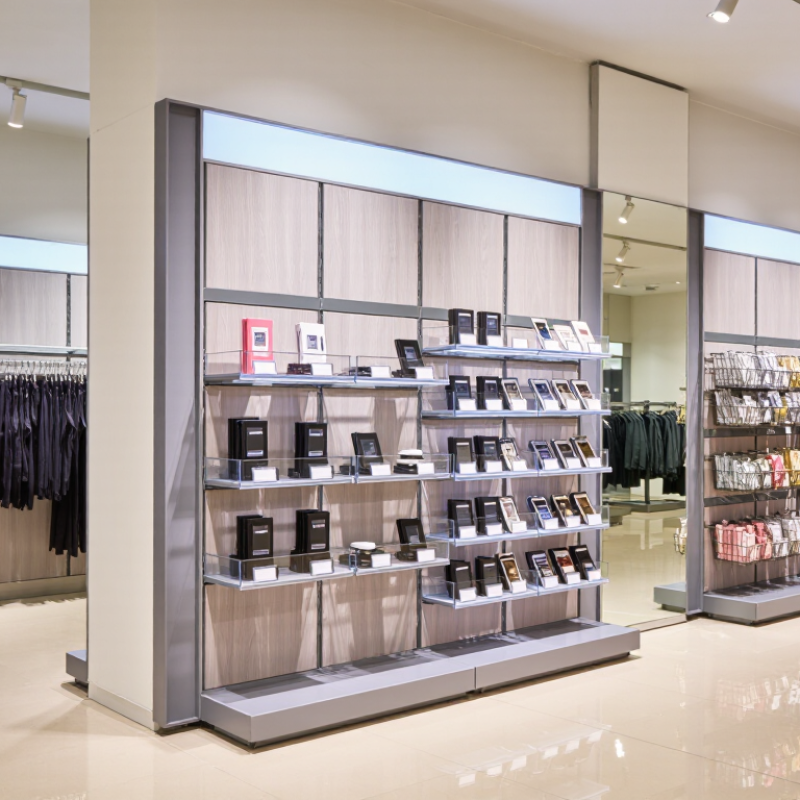
Slatwall displays are grooved wall panels designed to hold shelves, hooks, baskets, and other retail fixtures. Their horizontal slots let stores change product positions without rebuilding the wall. This flexibility suits clothing, electronics, accessories, and packaged goods. A single panel can support folded shirts today and hanging products tomorrow. That adaptability helps global retailers refresh layouts for seasonal campaigns or different store sizes.
For international buyers, slatwall displays can improve space efficiency and visual consistency. Panels use vertical wall space, keeping aisles clearer and products easier to reach. Buyers should review panel thickness, insert strength, surface finish, load capacity, and installation instructions. Packaging also matters. Weak corner protection can damage panels during long-distance shipping. A low price may look attractive, but replacement costs can quickly change the calculation. The system is practical, not perfect. Heavy merchandise still needs suitable brackets and secure wall fixing.
Tips: Request samples before ordering. Test hooks with real products. Confirm dimensions in millimetres and inches. Ask for packing photos, hardware lists, and installation drawings. Check whether the finish resists scratches and frequent cleaning. One overlooked detail can delay an entire store rollout.
China-made slatwall displays are built from a few practical components. The main panel usually uses MDF, plywood, or metal. Surface finishes may include melamine, laminate, paint, or wood-effect film. Horizontal aluminum or PVC inserts create the grooves. These inserts must stay straight and firmly fixed. Even a slight gap can affect shelf alignment.
A reliable configuration starts with panel size and wall structure. Common panels measure about 1200 by 2400 millimeters, but custom dimensions are widely available. Retail buyers can select floor-standing towers, wall-mounted sections, gondolas, or modular grids. Shelves, hooks, baskets, brackets, and sign holders should match the groove depth and loading needs. Heavy products require stronger brackets and secure anchoring. Small products need closer spacing.
Production experience shows that accessories deserve as much attention as the panel. Before shipment, buyers should check panel flatness, insert spacing, edge finishing, hardware quantity, and carton protection. Sample assembly is useful. It reveals problems that drawings may hide. One real issue is color variation between panels and accessories. It is manageable, but not always eliminated completely. A stronger inspection process should compare samples under consistent lighting. Clear assembly instructions also reduce installation mistakes at overseas retail sites. Good displays are not only attractive; they must remain stable, replaceable, and practical during daily merchandising.
For global retail buyers, slatwall evaluation should begin with material evidence, not surface appearance.
Medium-density fiberboard offers clean machining and stable graphics, but humidity can cause swelling. Powder-coated steel usually provides stronger rail support and better impact resistance. PVC is lightweight and moisture-resistant, yet it may deform near heat sources.
Ask for density, thickness, moisture resistance, edge treatment, and test standards. ISO 7170 covers strength and durability testing for storage furniture. Use it as a useful reference, not a substitute for project testing.
Load capacity must include the panel, brackets, shelves, and product weight. A 30-kilogram claim means little without spacing, fixing method, and safety factors.
Test it empty. Then load it. I recommend a static test above the planned working load, followed by repeated loading and unloading.
Deloitte’s 2024 U.S. Retail Industry Outlook reported that about 80% of retail executives expected shoppers to become more value-conscious. This supports displays that remain tidy, durable, and easy to replenish.
Performance also depends on visibility, hook spacing, shelf reach, and sign placement. The 2024 Global Shopper Study by NIQ highlighted continuing pressure on shoppers to justify purchases through value and convenience.
A practical trial should record dwell time, replenishment minutes, damaged units, and conversion by fixture zone.
I have seen attractive panels fail because accessories loosened after weeks. Catalog figures are not enough.
China’s slatwall display suppliers can support fast retail rollouts, but selection needs evidence. The U.S. Census Bureau reported $1.19 trillion in U.S. e-commerce sales during 2024. Physical stores now compete with online speed and frequent product changes. Modular slatwall systems help teams refresh shelves without replacing complete fixtures.
Quality begins with measurable specifications. Request steel thickness, panel density, coating type, load capacity, and dimensional tolerances. Ask for production samples before approving large orders.
ISO Survey data shows more than one million ISO 9001 certificates worldwide, yet certification alone cannot prove factory performance. An independent inspection should verify welding, surface finish, color consistency, carton strength, and assembly fit.
I have seen attractive samples fail during packing. That mistake is expensive.
Tips:
Compare two samples under the same load. Request material declarations and test records.
Confirm whether coatings, plastics, and electrical parts meet destination-market requirements, such as REACH or RoHS where applicable.
Review drawings carefully, including hook spacing and base stability.
The 2024 National Retail Federation report estimated retail returns at $890 billion in the United States.
Flexible displays can support fast product changes, but poor labeling and weak packaging may create avoidable returns.
Leave room for revision; the first specification is rarely perfect.
Ordering across borders requires more than selecting a panel finish. Buyers should confirm dimensions, load ratings, accessory compatibility, carton measurements, and replacement-part availability before payment. The World Bank’s Logistics Performance Index 2023 evaluates customs, infrastructure, tracking, and timeliness, showing why delivery performance differs between markets. A written purchase order should include drawings, approved materials, tolerances, inspection photos, and a spare-parts list. Small details prevent expensive surprises.
Shipping plans should match the destination, season, and store opening date. UNCTAD reports that more than 80% of global merchandise trade moves by sea, so ocean freight remains practical for large display orders. However, port delays can disrupt installation schedules. Consolidated cartons need corner protection, moisture barriers, clear labels, and pallet markings. Buyers should request both estimated transit time and a realistic buffer. The fastest quote is not always the safest choice.
Installation instructions should use numbered parts, simple diagrams, and local measurement units. Remote video guidance helps, but it cannot replace trained technicians for complex layouts. Support teams should answer within an agreed time and record each issue. A perfect rollout is unlikely. We have seen one missing bracket delay a complete wall. That mistake deserves reflection. Factory inspection, pre-shipment photos, and a final site checklist create stronger accountability. Feedback after opening can improve the next order, especially when fixtures face different flooring, walls, and customer traffic patterns.
Request steel thickness, panel density, coating type, load capacity, and dimensional tolerances. Specifications matter.
No. Certificates provide useful context, but independent inspections should verify welding, finish, color, cartons, and assembly fit.
Samples reveal weak joints, unstable bases, poor finishes, and inaccurate fittings. Compare two samples under the same load.
Ask for material declarations and relevant test records. Coatings, plastics, and electrical parts may need destination-market compliance.
Include drawings, approved materials, tolerances, inspection photos, dimensions, load ratings, accessories, and replacement-part requirements.
Request corner protection, moisture barriers, clear labels, and pallet markings. Strong packaging prevents expensive surprises.
Not always. Compare transit estimates, port risks, seasonal delays, and the store opening date. Add a realistic buffer.
Use numbered parts, simple diagrams, and local measurement units. Video support helps, but complex layouts may require trained technicians.
Confirm spare-part availability before payment. Record every issue and keep a final site checklist. One missing bracket can delay everything.
Review customer traffic, flooring, wall conditions, packaging, and installation feedback. The first specification is rarely perfect. Mine was not.
Slatwall Displays are versatile retail fixtures that help global retailers organize products, improve visibility, and adapt store layouts efficiently. Their horizontal panels, inserts, shelves, hooks, brackets, and other accessories can be configured for different merchandise categories, store sizes, and presentation goals. China-made Slatwall Displays may be produced from materials such as MDF, metal, acrylic, or laminated board, so buyers should assess surface quality, structural stability, load capacity, finish consistency, and ease of reconfiguration before placing an order.
Successful sourcing also depends on selecting suppliers with reliable quality control, flexible customization capabilities, clear production communication, and appropriate testing or compliance documentation for the target market. Buyers should confirm dimensions, packaging standards, sample approval procedures, lead times, shipping terms, installation instructions, and after-sales support in advance. With careful evaluation and coordination, retailers can obtain durable, attractive, and practical display systems that support consistent merchandising across multiple locations and markets.

DirectRack