China Top 10 Pegboard Displays Suppliers for Global Buyers

Time:2026-10-26 Author:Ethan
0%

Choosing reliable Pegboard Displays suppliers in China requires more than comparing catalog photos and quoted prices. Global buyers need stable materials, accurate dimensions, consistent finishes, and dependable export support. This guide introduces ten established suppliers for different retail and commercial display needs. The selection focuses on manufacturing experience, product range, customization ability, quality procedures, and communication reliability.

A strong supplier should explain panel thickness, hole spacing, coating options, hardware compatibility, and recommended load limits. These details matter when a display holds boxed cosmetics, tools, accessories, or packaged electronics. Factory visits, sample reviews, and production photos can reveal practical differences. Look closely at edge finishing, weld quality, powder-coating coverage, and packaging strength. A clean sample is useful. A repeatable sample is better.

Supplier rankings are never permanent. Market information can change, and company websites may present only their strongest projects. That is why buyers should request recent references, inspection records, carton specifications, and realistic production schedules. Ask difficult questions early. It prevents expensive surprises later. Freight terms, replacement policies, and after-sales response also deserve attention. Some suppliers offer excellent customization but weaker documentation. Others provide strong compliance files but limited design flexibility. This guide aims to make those trade-offs clearer. It is not a substitute for independent verification, but it offers a practical starting point for selecting China-based Pegboard Displays partners with greater confidence.
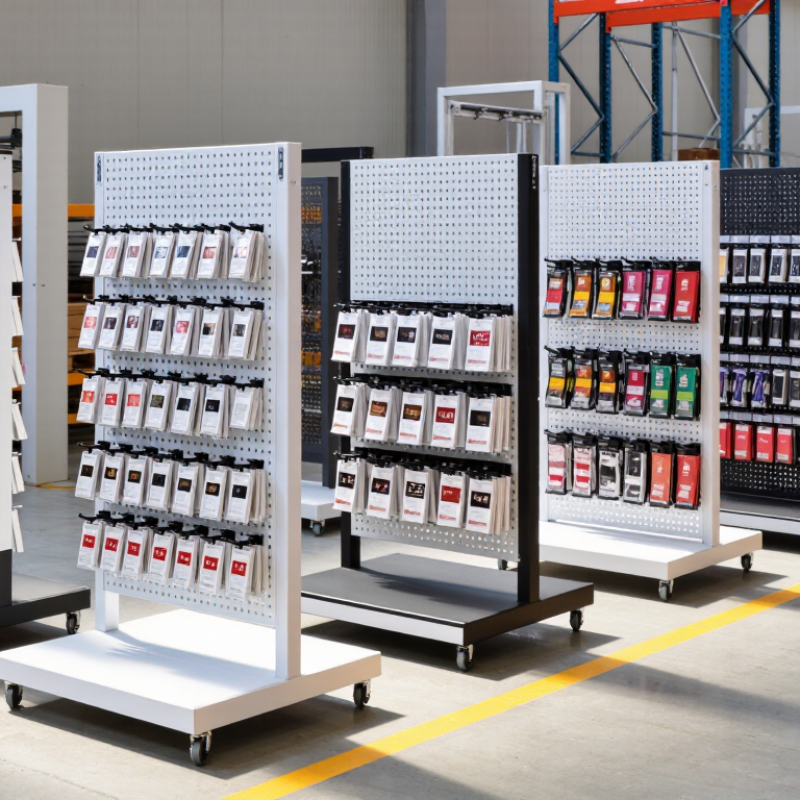
China Top 10 Pegboard Displays Suppliers for Global Buyers

What Are Pegboard Displays and Why Do Global Buyers Need Them?

Pegboard displays are retail panels with evenly spaced holes for hooks, shelves, bins, and brackets. They turn unused wall space into adjustable merchandising areas. In practice, buyers can change product positions without replacing the entire fixture. This flexibility suits stores, trade exhibitions, workshops, and temporary sales environments. A well-made panel should remain stable under regular handling. It should also support accurate hole spacing and smooth edges. Small details matter.

Global buyers often need pegboard displays because product ranges, store layouts, and selling seasons change quickly. Modular fixtures reduce redesign time and shipping volume. They can also improve product visibility in narrow spaces. However, not every low-cost panel performs equally well. Buyers should check board thickness, surface treatment, load capacity, hardware compatibility, carton protection, and installation instructions. Materials should match the environment, especially where humidity or frequent cleaning is expected. Ask for samples and test the fittings before placing a large order. That step feels slower, but it prevents expensive surprises. A display may look impressive in photos and still wobble on a busy sales floor. Export experience also requires clear dimensions, consistent packing, and dependable quality inspections. Local requirements can differ, so technical documents should be reviewed carefully. Pegboards are useful, not magical. Their value depends on practical design, honest specifications, and disciplined production.

China Top 10 Pegboard Displays Suppliers for Global Buyers

Common Pegboard Display Standards for International Purchasing

Pegboard displays are modular merchandising systems used for retail stores, workshops, warehouses, and trade environments. The chart compares commonly specified hole pitches and hole diameters used by buyers when evaluating compatibility between panels, hooks, brackets, and accessories. U.S. imperial formats commonly use a 1-inch pitch and 1/4-inch holes, while metric formats are typically specified in millimeters.

How to Evaluate China’s Pegboard Display Suppliers

When evaluating China’s pegboard display suppliers, begin with the product, not the catalog. Ask for samples matching your intended panel thickness, hole spacing, hook length, and finish. Measure every part. Photos are not proof. Check whether hooks fit firmly without scratching the board. A reliable supplier should provide material details, load-test records, and clear dimensional tolerances. Small inconsistencies can create visible gaps across a retail wall.

Factory capability matters more than a polished website. Request a video call from the production floor, then inspect cutting, welding, coating, and packing procedures. Ask how workers identify defective panels before shipment. In my experience, suppliers who explain their inspection process clearly are easier to manage. Still, explanations can be rehearsed. An independent factory audit offers stronger evidence. Confirm production capacity during your peak season, not only under normal conditions.

Communication also deserves a practical test. Send a drawing with five specific questions and compare the response time and accuracy. A dependable supplier should confirm packaging dimensions, carton labels, replacement policies, and shipping documents in writing. Ask for a pre-production sample before approving bulk manufacturing. I once focused too heavily on unit price and underestimated export packaging costs. That mistake changed my evaluation method. A lower quote may hide weaker coating, higher damage rates, or expensive rework. Keep a written scorecard covering quality, lead time, payment terms, documentation, and corrective action. No supplier scores perfectly. Look for transparent answers and measurable improvement.

China’s Top 10 Pegboard Display Suppliers by Product Strengths

China’s top 10 pegboard display suppliers stand out through different product strengths, not identical catalogs. Some focus on powder-coated steel panels for supermarkets and hardware stores. Others produce lightweight MDF boards, acrylic hooks, or modular counter units for cosmetics and accessories. The strongest suppliers usually offer adjustable hole spacing, reinforced brackets, clean edge finishing, and stable load testing. Small details matter. A loose hook can damage buyer confidence.

Grand View Research identifies retail shelving as a growing global category, supported by store modernization and modular merchandising. The U.S. Census Bureau reported that e-commerce represented about 16% of total U.S. retail sales in 2024. Physical displays must therefore support fast product changes and connected offline experiences. Suppliers with CNC cutting, automated welding, and powder-coating lines can improve repeatability. Export buyers should request coating thickness, load-test records, carton drop-test results, and material certificates. Factory photos alone are weak evidence.

Product strength also depends on customization. Several Chinese suppliers perform well with flat-pack structures, multilingual packaging, and mixed-container orders. Others are stronger in large retail rollouts, where consistent dimensions matter more than low unit prices. Lead-time control remains imperfect. Samples may look excellent, while mass production reveals slight color or alignment differences. Independent inspections and approved golden samples reduce this risk. The best supplier is not always the largest one; it is the one whose manufacturing discipline matches the buyer’s display environment.

Key Manufacturing, Customization, and Quality Considerations

China Top 10 Pegboard Displays Suppliers for Global Buyers

Key Manufacturing, Customization, and Quality Considerations

Pegboard displays begin with material control, not attractive drawings. Reliable factories verify steel thickness, board density, coating adhesion, and hook strength. Small variations can affect stability. Ask for material certificates and production photos before approving samples. A capable supplier should explain its cutting, welding, finishing, and packing processes clearly.

Customization requires practical communication. Provide drawings with dimensions, load requirements, hole spacing, colors, and installation details. Confirm whether the design supports standard accessories. Some factories offer flexible prototypes, while others prefer fixed models. This difference can affect tooling costs and delivery schedules. Request a physical sample. Digital renders often hide weak joints or awkward assembly.

Quality checks should cover appearance and performance. Inspect weld marks, sharp edges, paint coverage, base balance, and carton protection. For larger orders, use an independent inspection before shipment. Factory audits can reveal crowded work areas or inconsistent records. These details matter. No supplier is flawless, and even a good sample may not represent every production batch. A written inspection standard reduces disputes, although it cannot replace careful review. Also compare response speed, corrective action, replacement terms, and export documentation. The lowest quotation may create higher costs through rework, damaged goods, or delayed installation.

China Top 10 Pegboard Displays Suppliers for Global Buyers - Key Manufacturing, Customization, and Quality Considerations

No. Evaluation Dimension Practical Industry Benchmark What Global Buyers Should Verify Business Importance
1 Core Material Cold-rolled steel, stainless steel, MDF, plywood, or perforated aluminum are commonly used according to the application. Request material grade, thickness, density, certificates, and a sample cut section where applicable. Determines strength, corrosion resistance, weight, appearance, and expected service life.
2 Panel Thickness Retail pegboards frequently use sheet materials in approximately 0.6–1.5 mm for metal panels and 3–18 mm for wood-based panels, depending on size and load. Confirm actual measured thickness, tolerance, panel flatness, and reinforcement around mounting points. Affects load capacity, deflection, shipping weight, and compatibility with fixtures.
3 Hole Pattern and Pitch Common configurations include round or square holes with 25 mm or 1 inch vertical and horizontal spacing; other patterns are also available. Check hole diameter, center-to-center pitch, edge distance, positional tolerance, and fixture compatibility. Ensures hooks, shelves, baskets, and accessories fit consistently across the installation.
4 Load Performance Load capacity is application-specific and depends on panel material, span, mounting method, fixture geometry, and load distribution; there is no universal rating. Require a documented test method, evenly distributed and point-load results, safety factor, and wall-mounting assumptions. Prevents product failure, store damage, safety incidents, and misleading catalog claims.
5 Surface Finishing Typical finishes include powder coating, liquid paint, zinc plating, anodizing, laminate, melamine, and printed decorative surfaces. Confirm coating type, color reference, film thickness, adhesion, abrasion resistance, and corrosion testing where relevant. Controls visual consistency, scratch resistance, corrosion protection, and maintenance requirements.
6 Customization Capability Common customization areas include dimensions, hole layout, edge treatment, bends, brackets, hooks, graphics, packaging, and assembly configuration. Review engineering drawings, prototype procedures, tooling charges, revision control, and approval samples. Reduces fit problems and supports different retail formats, product categories, and merchandising plans.
7 Dimensional Quality Control Important control points include panel size, squareness, hole pitch, hole diameter, bend angle, weld position, and surface flatness. Ask for inspection plans, calibrated measuring equipment, control records, and pre-shipment inspection procedures. Maintains interchangeability and lowers installation, rework, and return costs.
8 Safety and Compliance Products may need market-specific requirements covering sharp edges, chemical substances, flammability, packaging, structural safety, or wood products. Define destination-market regulations and request applicable test reports, declarations, and material compliance documents. Supports legal market entry and reduces recall, customs, and liability risks.
9 Packaging and Export Readiness Suitable export packaging generally uses edge protection, separators, moisture control where needed, palletization, labeling, and drop or compression considerations. Check packaging drawings, carton specifications, pallet dimensions, shipping marks, and damage-claim procedures. Protects finish quality and helps optimize container utilization and landed cost.
10 Production and Supply Reliability Reliable sourcing requires stable raw-material procurement, documented production capacity, repeatable lead times, and clear quality-claim handling. Assess factory audit results, capacity evidence, production schedule, backup processes, lead-time records, and corrective-action responsiveness. Improves continuity of supply and reduces project delays, stockouts, and inconsistent batches.

Note: Actual specifications, load ratings, compliance requirements, lead times, and costs should be confirmed against the approved drawing, sample, test method, and destination-market regulations.

How to Select the Right Supplier for Your Market and Budget

For a global buyer, choosing among China’s top pegboard display suppliers requires more than comparing factory prices. Define the display’s purpose, size, load, finish, and installation method before requesting quotations. A retail wall system needs different strength than a lightweight event display. Ask each supplier for drawings, material details, surface-treatment options, and realistic production capacity. Request a physical sample whenever possible. Photos can hide uneven holes, thin panels, or weak brackets.

Price should be measured against total cost, not the unit quotation alone. Check minimum order quantities, packaging volume, tooling charges, shipping terms, and replacement policies. A supplier with a low price may create higher costs through damaged edges or inconsistent colors. Compare lead times during both normal and peak seasons. Confirm whether the supplier can maintain the same specifications across repeat orders. Small details matter here.

Reliable selection also depends on evidence. Review inspection records, export experience, customer references, and responses to technical questions. Ask for material and safety documents suitable for your destination market. An independent pre-shipment inspection can reveal problems before loading. Communication quality deserves attention too. Slow replies may become costly during design changes. My own comparison would not be perfect, because budget pressure can make weak compromises seem reasonable. Keep a written scoring sheet, and leave room for one rejected sample. That pause may protect your market launch better than a rushed purchase.

FAQS

What is a pegboard display?

It is a panel with evenly spaced holes for hooks, shelves, bins, and brackets. It uses wall space efficiently. Product positions can change without replacing the entire fixture.

Where can pegboard displays be used?

They suit retail stores, trade exhibitions, workshops, and temporary sales areas. They work especially well in narrow spaces. A stable base matters.

Why do global buyers choose modular displays?

Product ranges and store layouts often change quickly. Modular fixtures reduce redesign time and shipping volume. They can also support seasonal merchandising.

What should buyers check before ordering?

Check board thickness, material density, surface treatment, load capacity, and hole spacing. Review hook compatibility and installation instructions. Ask for samples before placing a large order.

How can buyers test a sample properly?

Install the sample with its intended hooks, shelves, and brackets. Apply realistic weight and move the fittings several times. Check wobbling, sharp edges, weak joints, and awkward assembly.

What customization details should buyers provide?

Provide drawings showing dimensions, colors, hole spacing, load requirements, and installation details. Confirm whether standard accessories fit the design. Clear drawings reduce misunderstandings.

How should product quality be inspected?

Inspect weld marks, paint coverage, edge smoothness, base balance, and carton protection. For larger orders, consider an independent inspection before shipment. A written inspection standard helps.

What packaging and export details deserve attention?

Confirm carton strength, internal protection, packing dimensions, and shipping marks. Review technical documents and installation instructions carefully. Small packing failures can damage finished panels.

Is the lowest quotation the best choice?

Not always. A low price may lead to rework, damaged goods, or delayed installation. Compare quality records, corrective actions, replacement terms, and response speed.

Can buyers rely entirely on a good sample?

No. A good sample may not represent every production batch. Consistent inspections and clear specifications remain necessary. Pegboards are useful, not magical.

Conclusion

This guide explores how Pegboard Displays help global retailers organize, present, and promote products in stores, exhibitions, warehouses, and commercial spaces. It explains their flexible structure, modular accessories, and space-saving advantages, while outlining the main factors buyers should consider when sourcing from China. These include supplier experience, production capacity, material selection, customization services, quality control, packaging, communication, and export support.

The article also compares ten Chinese suppliers according to their product strengths, such as retail fixtures, metal fabrication, wooden display systems, custom designs, and large-scale project capabilities. It highlights important manufacturing and inspection considerations, including durability, load-bearing performance, surface finishing, dimensional accuracy, safety, and consistency between samples and mass production. Finally, it provides practical guidance for matching a supplier’s capabilities, minimum order requirements, lead times, customization options, and total cost with the buyer’s target market, application, and budget.

Ethan

Ethan

Ethan is a seasoned marketing professional with a deep expertise in our company's innovative product line. With a passion for sharing knowledge and insights, he takes the lead in regularly updating our corporate blog, where he explores industry trends, product features, and effective marketing......