How to Choose the Best Shelving Boards?

Time:2026-11-23 Author:Sienna
0%

Choosing the right Shelving Boards is not just a matter of picking a color that matches the room. A board must support its load across a given span, resist sagging, and suit the surrounding moisture and temperature. Picture a pantry shelf holding jars: its depth, thickness, wall supports, and expected weight all matter. Small details count.

Reliable guidance starts with material data, not guesswork. The USDA Forest Products Laboratory’s Wood Handbook—Wood as an Engineering Material (FPL-GTR-282) discusses wood’s strength, stiffness, and response to moisture. APA – The Engineered Wood Association’s Panel Design Specification provides design information for structural-use panels. These references help explain why two boards with similar appearances may perform differently. They do not replace checking a product’s stated use, dimensions, or load guidance. That distinction is easy to miss.

This guide compares solid wood, plywood, particleboard, and medium-density fiberboard, with practical attention to span, thickness, finish, and installation. It also considers where each option makes sense, from a dry bedroom closet to a busy kitchen cupboard. One honest limitation: published panel data cannot predict every real shelf, because supports, fasteners, and loading habits vary. A shelf may look sturdy and still bow over time. The aim is a well-informed choice, not a promise of perfect performance.
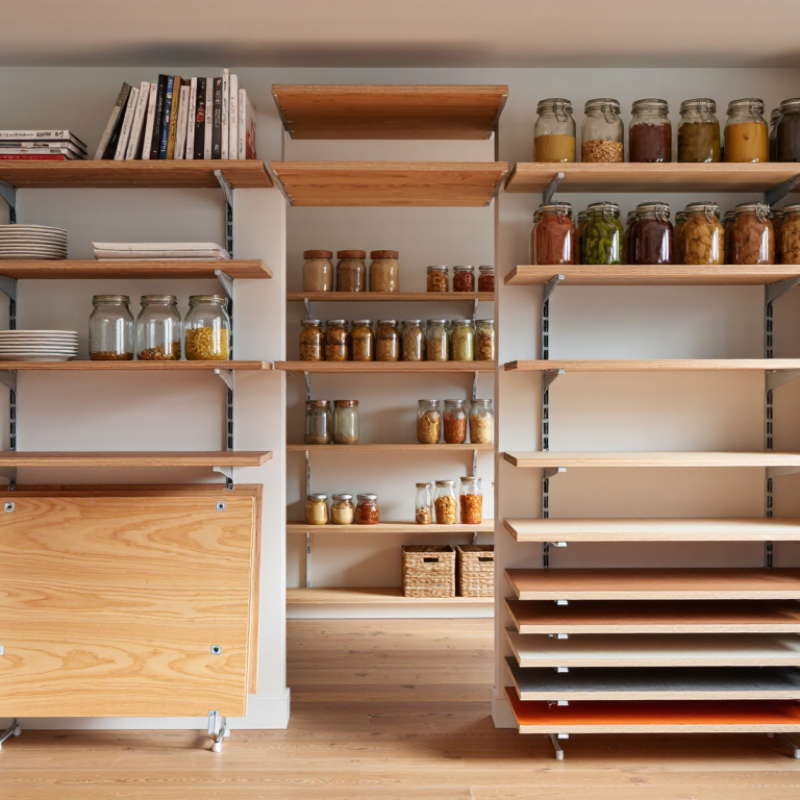
How to Choose the Best Shelving Boards?

Define the Shelf’s Purpose and Expected Load

Define the shelf’s purpose before choosing its board. A pantry shelf may carry jars across its full depth, while a garage shelf may hold one heavy toolbox near an edge. Estimate the total weight, then note whether it will be spread evenly or concentrated in one spot. Don’t forget the board’s span between supports; longer spans usually flex more. Small detail, big difference.

The USDA Forest Products Laboratory’s Wood Handbook (FPL-GTR-282, 2021) places wood’s fiber-saturation point near 30% moisture content. Below that point, rising moisture generally reduces wood strength and stiffness. A shelf in a damp laundry area may therefore behave differently from one in a dry bedroom. The American Wood Council’s 2024 National Design Specification also assigns design values by wood species and grade, so “solid wood” alone is not a useful capacity rating.

Check the supplier’s stated load rating and whether it assumes evenly distributed weight. Then compare that rating with your expected load, support spacing, and fastening method. A board that looks thick can still sag over a wide gap. I would leave a margin rather than plan right up to the limit; estimates are rarely perfect, and unevenly placed objects can change the load pattern.

Compare Common Shelving Board Materials

How to Choose the Best Shelving Boards?
Compare Common Shelving Board Materials

Solid wood offers a natural grain and can be sanded or refinished. It suits visible shelves, but humidity may cause boards to expand or warp. Plywood uses bonded layers, giving it useful strength for many shelving projects. Its edges can look rough, so consider edge banding or a finished trim. MDF has a smooth surface that takes paint evenly. It is often heavy and can swell if exposed to moisture. Particleboard is usually budget-friendly, but its edges may crumble and screws can loosen under repeated stress.

The material alone does not determine how much weight a shelf can hold. Thickness, shelf span, support placement, and load all matter. A long board carrying books may sag, even if its material seems sturdy. I would check the manufacturer’s load guidance where available, then test a small section before building a full unit. I used to focus on board thickness; support spacing deserved just as much attention. Not always obvious.

Tips: Match the board to the room: use moisture-resistant options in damp areas, and protect unfinished edges. For a pantry shelf, measure the longest unsupported span and account for heavy jars. A quick sketch helps, though my first measurements are not always right.

How to Choose the Best Shelving Boards? — Compare Common Shelving Board Materials

Material Strength and Load Considerations Moisture Resistance Surface and Appearance Typical Cost Best Suited For
Solid wood Often strong, but performance varies by species, board quality, thickness, and grain. Long shelves can sag without adequate support. Varies by species and finish. Unsealed wood can absorb moisture and may expand, shrink, or warp as humidity changes. Natural grain; can be sanded, stained, or painted. Knots and color variation are common. Medium to high, depending on species and grade. Visible shelves, furniture, and projects where a natural wood appearance is desired.
Plywood Cross-layered veneers provide useful strength and stability. Capacity depends on grade, thickness, span, and support layout. Standard interior grades are not waterproof. Exterior or moisture-resistant grades use suitable adhesives, but exposed edges still need protection. Available with different face-veneer grades; edges show layered plies and may need edging or finishing. Medium; varies by grade, thickness, and face veneer. General-purpose shelves, cabinets, and applications where a strong, relatively stable panel is needed.
Medium-density fiberboard (MDF) Uniform and smooth, but can be heavy and may sag over long unsupported spans. Screw holding is weaker near edges than in solid wood. Standard MDF can swell if it gets wet. Moisture-resistant grades are available but are not waterproof. Very smooth surface that takes paint well; edges are also smooth but absorbent and often need sealing. Low to medium. Painted shelves, built-ins, and indoor projects where a smooth finish is important.
Particleboard Suitable for lighter-duty uses when properly supported. It can sag under heavy loads or over long spans; screw holding is limited, especially near edges. Standard grades can swell and lose strength when exposed to moisture. Usually has a coarse core and is commonly covered with veneer, laminate, or another finish. Low. Budget indoor shelving and furniture panels used in dry conditions.
Melamine-faced particleboard Load performance depends mainly on the particleboard core, panel thickness, span, and support. Heavy loads may require closer supports. The surface resists everyday spills better than an unfinished core, but unsealed edges and joints can absorb water and swell. Factory-applied decorative surface is smooth and easy to wipe clean; cut edges usually need edge banding. Low to medium. Closets, cupboards, and indoor storage where a ready-finished, easy-clean surface is useful.
Oriented strand board (OSB) Structural grades can be strong for their intended applications, but shelf suitability still depends on thickness, span, grade, and support. Standard OSB is not waterproof; prolonged wetting can cause swelling, particularly at panel edges. Exposure ratings vary by product. Visible strands create a coarse, distinctive appearance; it is less smooth than MDF or finished panels. Low to medium. Utility shelving and workshop projects where appearance is secondary and the panel grade fits the intended use.

Selection tip: No material has a fixed safe load capacity. Check the panel’s grade and thickness, shelf span, support spacing, fixing method, and expected load. For damp areas, choose a suitable moisture-resistant product and protect cut edges; moisture-resistant does not mean waterproof.

Choose Board Thickness and Support Requirements

A shelf’s thickness matters, but the unsupported span matters just as much. In a simple beam model, doubling the span can increase deflection about sixteenfold, while doubling board thickness can reduce it roughly eightfold. Real shelves also depend on material, load placement, and fasteners. The USDA Forest Products Laboratory’s Wood Handbook reports clear-wood stiffness values near 1.2 million psi for spruce-pine-fir and 1.8 million psi for southern pine. These are reference averages, not guarantees for finished boards; grade, defects, and moisture change performance.

Measure the longest distance between supports, then consider what will sit there. A shelf holding lightweight linens may tolerate more flex than one carrying books or dense cookware. For long spans, add a center bracket or choose a thicker board. Plywood and solid wood can behave differently, so check the panel maker’s span guidance when available. A small sag may seem harmless at first. It can grow over time.

Tips: Load the shelf as it will be used, then sight along its front edge for bowing. Keep heavy items near supports, not the center. If unsure, shorten the span; I would rather add one bracket than trust a guessed load rating.

Measure the Space and Select Board Dimensions

Measure the space where the shelf will sit, not just the open wall nearby. Use a tape measure to check the width at the front, middle, and back. Walls and alcoves are not always square. Use the narrowest measurement, then leave a little clearance so the board can be fitted without scraping the paint.

Check depth from the wall to the edge you want the shelf to reach. Account for trim, pipes, door swings, and nearby handles. A board that is too deep can obstruct a walkway; one that is too shallow may not hold your storage boxes securely. Measure the items you plan to store, too. For example, a 12-inch-deep box needs a board slightly deeper than 12 inches.

Consider the board’s length and thickness together. Longer boards can sag under heavy books, even when they look sturdy at first. Measure the distance between supports, and follow the load guidance for the material and mounting hardware. I have sometimes measured only once and regretted it; a second check catches small errors. Mark the intended height with painter’s tape, then stand back and test how it feels. It is a little fussy, but useful.

How to Choose the Best Shelving Boards: Measure the Space and Select Board Dimensions

Measure the clear opening between the supports, then choose a board slightly shorter so it fits easily. These examples allow ½ inch of clearance on each side; check your brackets and actual space before cutting.

Suggested board length = measured opening width − 1 inch total clearance. Board depth and thickness should also suit the items being stored and the support system.

Consider Moisture, Wear, and Maintenance Needs

Shelving boards face different kinds of stress, and moisture is easy to underestimate. In a bathroom or laundry area, damp air can swell exposed edges, especially on particleboard. Solid wood can also cup or crack when humidity changes repeatedly. Plywood often handles movement better, but its cut edges still need protection. Water leaves clues. Watch for raised grain, dark spots, or a rough seam after a spill.

Wear depends on what the shelf holds and how often items slide across it. Heavy books need a stiff board with enough thickness and support to limit sagging. Pantry jars can scratch a surface when dragged, while cleaning bottles may leave residue. A durable finish helps, but it does not make a board waterproof. That matters. Wipe spills promptly, and use shelf liners where containers tend to leak. Avoid harsh cleaners unless the surface instructions allow them; some can dull a finish. A common mistake is choosing a board by appearance alone. Check the edges, expected load, and cleaning routine, then accept that even a suitable shelf may need occasional care.

FAQS

How do I estimate the load a shelf must carry?

Add the weight of the items, then note whether they sit evenly or cluster in one spot. A toolbox near an edge creates a different load pattern from evenly spaced jars. Leave a margin; estimates can be wrong.

Which board material should I choose?

Solid wood has visible grain and can be refinished, but humidity may cause movement. Plywood suits many projects, though its edges may need trimming. MDF paints smoothly but can swell when damp. Particleboard often costs less, but edges and screw holes may wear.

Does a thicker board always hold more weight?

Not by itself. Thickness, material, support spacing, fastening, and load all affect performance. A thick board can still sag across a wide gap. Support spacing matters more than I once expected.

How does shelf span affect sagging?

Longer unsupported spans usually flex more, especially under heavy books or jars. Measure between supports, then compare the span and expected load with the supplier’s guidance. Small detail, big difference.

How should I measure a shelf space?

Check the width at the front, middle, and back. Use the narrowest measurement and leave a little clearance for fitting. Walls are not always square. I have regretted measuring only once.

How deep should the shelf be?

Measure the items and nearby obstacles, including trim, pipes, handles, and door swings. A 12-inch box needs a board slightly deeper than 12 inches. Too deep may block a walkway.

Can moisture affect a shelving board?

Yes. Damp rooms can change how wood performs, and some boards may swell or warp. Consider moisture-resistant options for laundry areas, and protect unfinished edges. Dry rooms are different.

Should I check the shelf before building the full unit?

Yes. Review the stated load rating and its assumptions, including support spacing and weight distribution. Try a small section first, if practical. My measurements are not always right.

Conclusion

Choosing the right Shelving Boards starts with understanding what they need to hold and how often they will be used. Estimate the expected load, then compare materials such as solid wood, plywood, particleboard, and metal-based panels, considering their strength, appearance, cost, and suitability for the space. The board’s thickness and the distance between supports also matter: heavier items and longer spans generally need thicker boards or more frequent support to help prevent sagging.

Next, measure the available space carefully, including the shelf’s length and depth, and choose dimensions that allow items to fit without obstructing nearby doors or pathways. Finally, consider the surrounding conditions. Areas exposed to moisture may require water-resistant materials or protective finishes, while frequently used shelves benefit from durable surfaces that are easy to clean. Matching material, size, support, and maintenance needs will help create shelving that is practical and dependable.

Sienna

Sienna

Sienna is a skilled marketing professional with a deep expertise in our company’s core products and services. With a passion for innovation and detail, she plays a pivotal role in crafting insightful blog posts that not only highlight the unique features of our offerings but also provide valuable......