Top 10 Types of Mobile Shelving for Global Buyers

Time:2026-09-22 Author:Oliver
0%

Choosing the right Mobile Shelving system can transform unused floor space into an organized, accessible workplace. Yet global buyers face different building layouts, budgets, safety expectations, and storage loads. A solution that works in a European archive may perform poorly in a humid warehouse or a busy hospital.

Storage consultant John F. Vollmer once said, “Every storage decision is also a preservation decision.” That principle deserves attention. Mobile Shelving is not simply a set of rolling shelves. It affects aisle width, staff movement, fire planning, equipment access, and long-term maintenance. Small details matter. A heavy archive box can expose a weak design quickly.

This guide examines ten practical types of Mobile Shelving for international buyers. They include manual systems, mechanical-assist units, electric models, compact archive shelving, library shelving, industrial mobile racks, pallet-based systems, museum storage, medical storage, and high-density office solutions. Each type serves a different purpose. Some prioritize capacity. Others protect delicate materials or improve daily access.

Real projects are rarely perfect. Measurements change. Budgets tighten. Installation assumptions can also fail. Therefore, buyers should compare load ratings, rail quality, safety sensors, corrosion resistance, control systems, and after-sales support before placing an order. Local service availability deserves equal attention. A low purchase price may become expensive after repeated repairs.

The following overview offers a practical starting point, not a universal answer. It encourages buyers to question attractive specifications and test real operating conditions. That extra caution can prevent crowded aisles, unstable loads, and disappointing space savings. Mobile Shelving should support people first, then capacity.
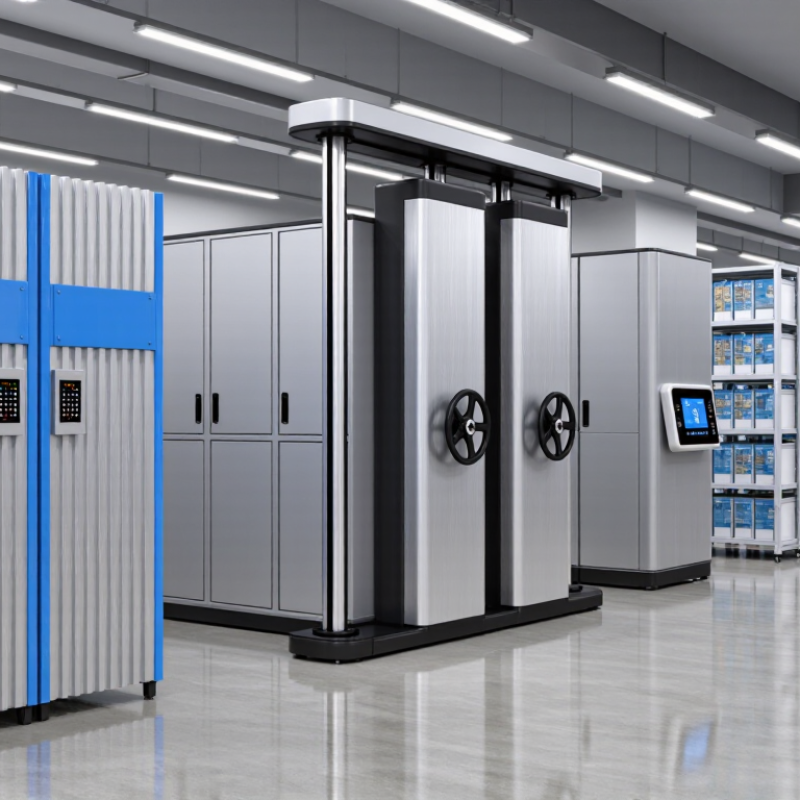
Top 10 Types of Mobile Shelving for Global Buyers

Mobile Shelving Basics: Definition, Structure, and Operating Principles

Mobile Shelving Basics: Definition, Structure, and Operating Principles

Mobile shelving is a storage system mounted on movable bases. Unlike fixed shelving, several units share floor tracks and create one accessible aisle. Operators open only the required section, while other rows remain closed. This arrangement can increase storage density without expanding the room.

The structure usually includes steel uprights, adjustable shelves, drive bases, guide rails, and an operating mechanism. Some systems use hand wheels, while larger installations may use powered controls and safety sensors. A typical hand wheel moves smoothly when shelves are evenly loaded. Heavy files belong on lower levels. Lighter cartons should stay higher, within comfortable reach.

In practical planning, measure floor strength, ceiling height, aisle width, and emergency access before selecting a configuration. Check the rated load for each shelf, not only the total bay capacity. Uneven weight can make movement difficult. Small objects may also fall when a unit starts suddenly. Clear labels and routine inspections reduce these problems.

The best layout depends on daily use. An archive room needs different spacing from a parts store. Noise, dust, humidity, and operator training also matter. A compact design may look efficient but feel slow during busy periods. This is where planning can be imperfect. Real users sometimes leave one aisle open all day, reducing the expected space savings. Mobile shelving should be tested with actual workflows before final installation.

Key Features Used to Classify Mobile Shelving Systems

Top 10 Types of Mobile Shelving for Global Buyers

Key Features Used to Classify Mobile Shelving Systems

Mobile shelving is classified by more than its appearance. Buyers should examine drive type, rail layout, load rating, aisle control, and operating environment. Manual systems suit short runs and lighter archives. Mechanical-assist units reduce turning effort. Electric systems support longer rows and heavier loads. Some designs use single-deep shelves, while others combine compact storage with movable bases.

The 2024 MHI Annual Industry Report found that 55% of supply chain leaders planned to increase technology investment. This trend supports stronger interest in powered storage, but automation is not always the correct answer. Capacity depends on floor loading, shelf height, product weight, and required access frequency. Safety features also separate system types. Look for anti-tip protection, obstacle sensing, emergency stops, and controlled acceleration. A warehouse with dust or temperature changes needs different materials and controls. Classification becomes practical here, not merely technical.

Tips: Measure the clear aisle first. Then record the heaviest item, not the average one. Ask for tested load ratings and maintenance intervals. Check local electrical and workplace safety requirements. Energy use deserves attention too. Poorly planned movement can erase density gains. I have seen layouts promise 80% more capacity, yet deliver less after staff access was considered. That gap needs honest review.

Ten Major Types of Mobile Shelving for Different Applications

Top 10 Types of Mobile Shelving for Global Buyers

Ten Major Types of Mobile Shelving for Different Applications

Mobile shelving uses floor space more carefully than fixed racks. In real projects, the best choice depends on load, access frequency, room shape, and safety controls. Manual mobile shelving suits paper files and small storage rooms. Mechanical-assist shelving reduces effort when loads become heavier. Electric mobile shelving serves archives and warehouses needing frequent, controlled movement. High-density archive shelving stores boxed records in narrow aisles. Library mobile shelving protects books while increasing seating space. Industrial pallet mobile shelving supports heavier cartons and spare parts. Cantilever mobile shelving handles long materials, such as pipes, panels, and timber. Each type needs verified load data.

Medical mobile shelving supports organized supplies in clinics and laboratories. It usually needs smooth surfaces, clear labeling, and easy cleaning. Outdoor mobile shelving uses corrosion-resistant finishes for sheltered yards and service areas. Weather exposure still causes problems if drainage is ignored. This is a common planning mistake. Buyers should also review floor capacity, aisle width, emergency access, power quality, and operator training. Local building and electrical requirements must be checked before installation.

Tips: Measure the room twice. Mark columns, doors, sprinklers, and turning points. Ask for tested load ratings, maintenance details, and installation records. Leave practical access for inspection, not only maximum storage. A slightly wider aisle may improve daily work more than extra shelf space. Test one loaded bay before approving the full system.

Top 10 Types of Mobile Shelving for Global Buyers - Ten Major Types of Mobile Shelving for Different Applications

Type of Mobile Shelving Movement and Configuration Typical Load Capacity Typical Aisle Requirement Potential Floor-Space Saving Common Applications Key Advantages and Considerations
1. Manual Mobile Shelving Units are mounted on rails and moved by hand using a wheel or crank handle. 80–250 kg per shelf One access aisle, usually 750–1,200 mm 30–50% Offices, archives, libraries, storerooms, and small warehouses. Lower purchase and maintenance cost than powered systems. Best for moderate use and relatively light loads.
2. Electric Mobile Shelving Motor-driven carriages travel along floor rails and are controlled by push buttons or a control panel. 100–500 kg per shelf One controlled access aisle 40–70% High-density archives, industrial stores, laboratories, and records centers. Suitable for frequent operation and heavier units. Requires electrical installation, safety sensors, and regular inspection.
3. High-Density Archive Shelving Compact mobile carriages combine closely spaced shelving with a single opening aisle. 60–200 kg per shelf Approximately 800–1,000 mm 50–70% Paper files, legal records, historical documents, and administrative archives. Maximizes document capacity in limited floor area. Requires careful indexing, load distribution, and environmental control for sensitive records.
4. Library Mobile Shelving Low- or medium-height book shelving moves on manual or powered bases. 50–150 kg per shelf Usually 900–1,200 mm 30–60% Public libraries, school libraries, university collections, and reference rooms. Provides high book density while preserving an accessible layout. End panels, lighting, accessibility, and emergency egress must be considered.
5. Pallet Mobile Racking Heavy-duty pallet racks are installed on powered mobile bases and open only the required aisle. 500–3,000 kg per beam level One forklift aisle, commonly 2,700–3,500 mm 20–40% Cold stores, spare-parts warehouses, manufacturing plants, and distribution facilities. Offers high pallet density and good stock selectivity. Floor loading, rail alignment, fire protection, and forklift clearance are critical.
6. Cantilever Mobile Racking Mobile bases carry upright frames and horizontal arms for long or irregular products. 250–1,500 kg per arm level One handling aisle, generally 1,200–2,500 mm 25–50% Steel bars, pipes, timber, profiles, carpets, panels, and other long loads. Provides unobstructed front access and adjustable storage levels. Load length, center of gravity, and arm deflection must be checked.
7. Bin and Drawer Mobile Cabinets Drawers, bins, or compartment modules move on a compact mobile chassis. 30–250 kg per drawer or shelf One operator aisle, usually 800–1,000 mm 30–60% Small components, maintenance parts, tools, fasteners, and electronic accessories. Improves item organization and picking accuracy. Drawer extension, cabinet stability, and ergonomic access should be evaluated.
8. Cleanroom Mobile Shelving Sealed or smooth-surface shelving operates on mobile rails, with materials selected for controlled environments. 50–250 kg per shelf Based on process and operator requirements 30–50% Pharmaceutical production, medical-device facilities, laboratories, and controlled storage rooms. Supports dense storage and easier cleaning. Stainless or coated surfaces, low-particle components, grounding, and validated cleaning procedures may be required.
9. Refrigerated or Cold-Storage Mobile Racking Mobile racking is installed in insulated rooms and operated manually or electrically. 300–1,500 kg per pallet position One equipment-compatible aisle 20–40% Frozen food, chilled products, biological materials, and temperature-sensitive inventory. Reduces the refrigerated volume needed for the same stock quantity. Components must tolerate condensation, low temperatures, corrosion, and restricted maintenance access.
10. Automated Mobile Storage System Motorized storage units are controlled by software, sensors, barcode systems, or warehouse-management interfaces. 100–1,500 kg per load unit System-defined operator or robot aisle 40–80% E-commerce fulfillment, high-value inventory, automated warehouses, and secure parts storage. Improves traceability, access control, and labor efficiency. Higher investment requires integration, backup procedures, cybersecurity, and trained maintenance personnel.

Note: Capacity, aisle width, and floor-space savings are typical planning ranges. Actual specifications depend on shelf dimensions, load distribution, building structure, fire codes, equipment selection, and local safety regulations.

How to Compare Mobile Shelving by Space, Load, and Accessibility

Top 10 Types of Mobile Shelving for Global Buyers

How to Compare Mobile Shelving by Space, Load, and Accessibility

Mobile shelving includes manual, electric, rail-guided, archive, pallet, carton, cantilever, carousel, bin, and high-density systems. The best choice depends on the stored product, not the product catalogue. In a 40-square-metre archive, compact mobile shelving can reduce fixed aisles and increase usable capacity. However, tightly packed rows may slow retrieval during busy periods. Space savings are not the whole story.

Load ratings need evidence. Check the beam, shelf, base, rail, and floor capacity separately. A pallet mobile system may carry hundreds of kilograms per level, while archive shelving suits lighter boxes. The 2024 MHI Annual Industry Report found that 83% of respondents view supply-chain innovation as a competitive advantage. That supports investment, but not careless purchasing.

Ask for tested load tables, deflection limits, cycle testing, and installation records. My first layout review missed floor flatness. That mistake changed the final cost.

Accessibility requires real movement trials. The U.S. Access Board’s 2010 ADA Standards specify a 36-inch minimum accessible route and 30-by-48-inch clear floor space. Door handles, emergency access, lighting, and manual force also matter. OSHA 29 CFR 1910.176 requires stored materials to remain secure and stable.

Tips: Mark one open aisle. Push a loaded bay. Measure reach height. Test with gloves. Keep a safety gap. Accessibility can weaken when every inch is optimized.

Global Buying Factors: Safety, Standards, Installation, and Support

For global buyers, mobile shelving is more than a space-saving product. Safety begins with accurate load calculations, stable tracks, guarded moving parts, and clearly visible capacity labels. A shelf holding boxed files differs greatly from one carrying metal components. Ask for test reports, material details, and inspection records before placing an order. Do not rely on attractive photographs alone.

Standards vary by destination, building type, and workplace use. Suppliers should explain which structural, electrical, fire, and accessibility requirements apply locally. In seismic areas, buyers may need anchoring systems and stronger bracing. Emergency routes must remain clear, even when every meter feels valuable. A qualified local engineer should review floor strength and installation drawings. This step is often skipped. That creates avoidable risk.

Installation quality affects daily safety. Request method statements, staff training, commissioning checks, and maintenance schedules. Remote guidance may help, but complex systems usually need trained technicians on site. Support should include spare-part availability, response times, warranty terms, and manuals in a usable language. I have seen projects delayed because small rollers or control components were unavailable. A dependable supplier admits these limitations early and offers practical alternatives. Buyers should also inspect the finished system, record defects, and schedule periodic checks. A perfect plan can still fail during busy operations.

Top 10 Types of Mobile Shelving for Global Buyers

Global buying factors: safety, standards, installation, and support

The chart uses comparative planning scores from 1 to 5 based on commonly recognized characteristics of each shelving type. Higher scores indicate stronger typical suitability for the stated global buying factor. Final selection should be checked against local building codes, fire regulations, electrical requirements, seismic conditions, load specifications, installation procedures, and supplier service coverage.

FAQS

What is mobile shelving?

Mobile shelving uses storage units mounted on movable bases. The units share floor tracks and create one accessible aisle. Other rows stay closed.

How does mobile shelving save space?

Operators open only the required section. This reduces permanent aisles and can increase storage density without enlarging the room.

What parts make up a mobile shelving system?

Common parts include steel uprights, adjustable shelves, drive bases, guide rails, and operating controls. Some systems also include safety sensors.

Which items should go on lower shelves?

Heavy files and cartons should stay on lower levels. Lighter items belong higher, within comfortable reach. This improves stability and handling.

How should a site be measured before installation?

Measure floor strength, ceiling height, clear aisle width, and emergency access. Record the heaviest item, not the average item. Small mistakes matter.

Which operating method suits different storage needs?

Hand wheels suit shorter rows and lighter archives. Mechanical assistance reduces turning effort. Powered controls may suit longer rows and heavier loads.

What safety features should buyers examine?

Look for anti-tip protection, obstacle sensing, emergency stops, and controlled acceleration. Even loading helps movement. Sudden starts can drop small objects.

Is the most compact layout always the best choice?

No. A compact design may slow access during busy periods. Staff might leave one aisle open all day. Test the layout with real workflows.

Conclusion

This guide explains the fundamentals of Mobile Shelving, including its definition, core structure, and operating principles. It introduces the main features used to classify different systems, such as rail configuration, drive method, shelf layout, load capacity, mobility, and access control. By examining ten major types, readers can understand how mobile shelving supports applications in offices, archives, libraries, warehouses, healthcare facilities, and other organized storage environments.

The article also provides a practical framework for comparing systems according to space efficiency, weight capacity, retrieval speed, flexibility, and user accessibility. For global buyers, it highlights essential purchasing considerations, including workplace safety, relevant technical standards, installation requirements, maintenance planning, operator training, and long-term support. With these factors in mind, buyers can select a reliable solution that makes better use of available space while maintaining safe, convenient, and efficient access to stored materials.

Oliver

Oliver

Oliver is a seasoned marketing professional with a wealth of expertise in driving brand awareness and engagement. With a deep understanding of our company's product offerings, he consistently delivers high-quality content that enriches our professional blog. His insights not only shed light on......