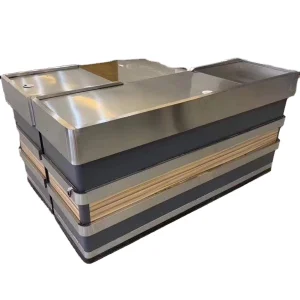
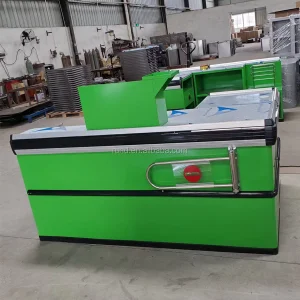
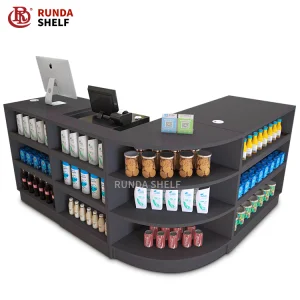
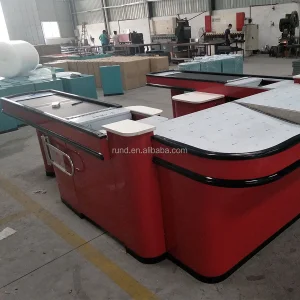
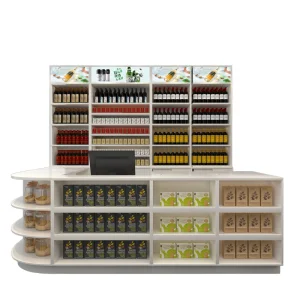
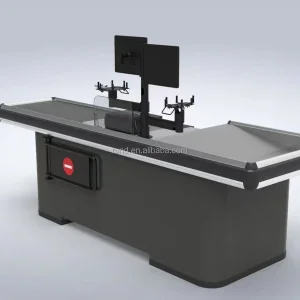
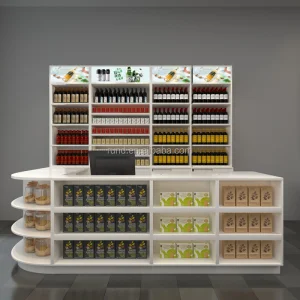
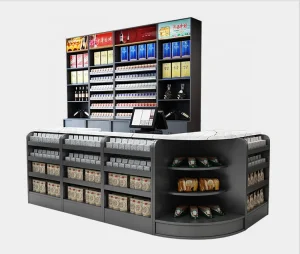
Heavy-duty, ergonomically engineered cashier desks tailored for high-volume grocery chains, shopping malls, and specialty stores across Sweden.
The retail industry in Sweden represents a highly sophisticated market segment driven by sustainability, structural efficiency, and advanced technological integration. Operating within major metropolitan nodes—such as the Stockholm-Uppsala corridor, Gothenburg's logistics hubs, and the Øresund growth zone centered around Malmö—Swedish retail networks operate with extremely high standards for both customer experience and workplace ergonomics. Large grocery cooperatives and retail conglomerates such as ICA Gruppen, Axfood (Willys and Hemköp), Coop Sverige, and Bergendahls place rigorous specifications on front-of-house equipment. In Sweden, checkout counters are not merely structural transaction points; they are key variables in customer throughput, labor costs, and space optimization.
A dominant trend within the Swedish retail ecosystem is the rapid evolution of hybrid and automated checkout points. With Sweden leading the global transition toward a cashless economy, checkout lanes must seamlessly house modern POS payment terminals, RFID scanning fields, and integrated scale modules. Traditional conveyor checkout configurations must adapt to compact, ergonomic designs to maximize floor productivity. Consequently, the demand for custom-fabricated metal and hybrid medium-density fibreboard (MDF) checkout desks has intensified. Enterprises require systems that reduce physical strain on cashiers—abiding by Sweden's strict occupational health and safety guidelines (Arbetsmiljöverket)—while providing structural strength to handle high daily customer counts.
Information Gain Insight: Modern Swedish retail projects prioritize flexible, modular cash counters that can be retrofitted with self-checkout (SCO) components or integrated cash management systems like CashGuard, reflecting the high labor cost structure of the Scandinavian region.
To successfully integrate checkouts into Sweden's commercial infrastructure, compliance with European safety, environmental, and structural standards is mandatory. For commercial fixtures, compliance with EN safety norms and CE marking is essential. Our production procedures at Dongguan Dingguan Metal Products Co., Ltd. (DirectRack) are engineered to align with these requirements. Structural designs undergo compression, loading, and deflection testing to guarantee mechanical safety during operations. Standardized product inspection methods include X-ray weld seam analysis and full-scale deflection testing to ensure long-term reliability under continuous operations.
Beyond structural safety, environmental and chemical regulations in Sweden are exceptionally strict. All wooden components, including our high-grade MDF and solid timber checkout counters, comply with E1 or E0 formaldehyde emission limits. Furthermore, metal structures are treated with electrostatic powder coatings that are free of TGIC and heavy metals, aligning with REACH chemical safety protocols. For Swedish retailers committed to sustainability goals, selecting sustainably sourced materials and non-toxic surface treatments is a critical factor in their supply chain procurement processes.
Founded in 2016, Dongguan Dingguan Metal Products Co., Ltd. (DirectRack) is a technology-driven manufacturing enterprise headquartered in the industrial hub of Dongguan, Guangdong Province. With over 10 years of industry expertise and 8 years of international export background, our modern facility spans a building area of 25,000 square meters. Our annual export revenue consistently exceeds $18 million USD, reflecting our position as a reliable supplier of shopfitting structures and steel storage solutions to international retailers and logistics networks.
DirectRack operates with a comprehensive quality governance system under the supervision of 28 specialized QC inspectors. Our raw materials are sourced from leading domestic steel mills, ensuring consistent metallurgical characteristics. Our quality control framework adheres to international AS4084 and OSHA safety standards. Standard testing includes coating thickness measurement via magnetic gauge, column compression destruction tests, and full-scale beam deflection loading tests. Backed by 35 senior R&D engineers, DirectRack provides structural calculation models and fully customized configurations, releasing over 40 new product designs annually to meet changing market needs.
A visual walk-through of our modern fabrication and processing workflow, ensuring structural integrity and precise dimensional control.
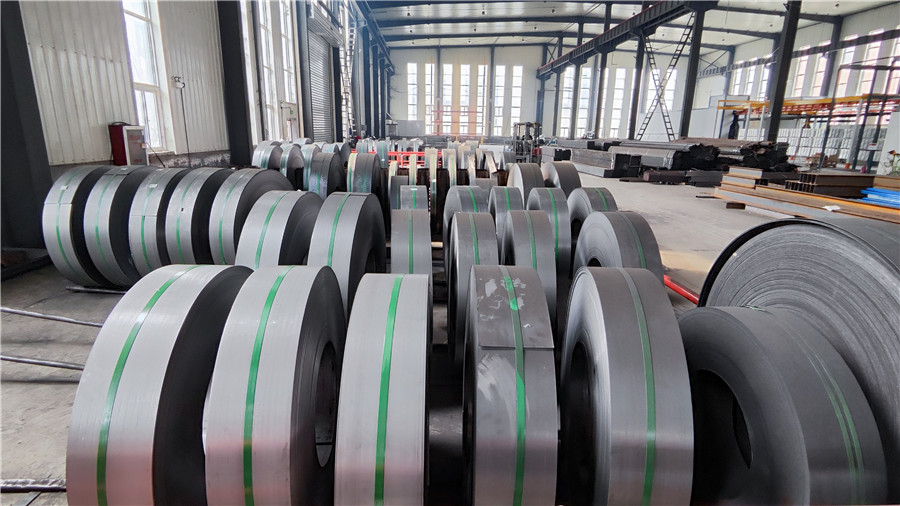
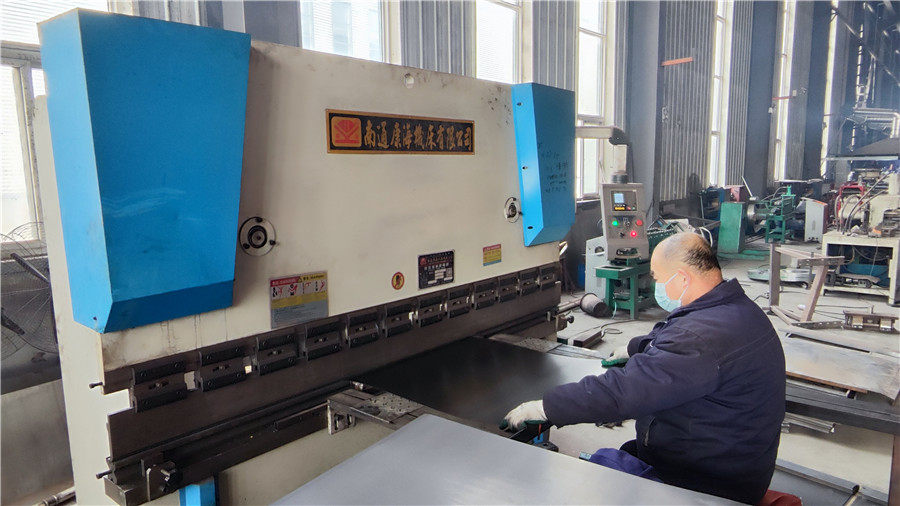
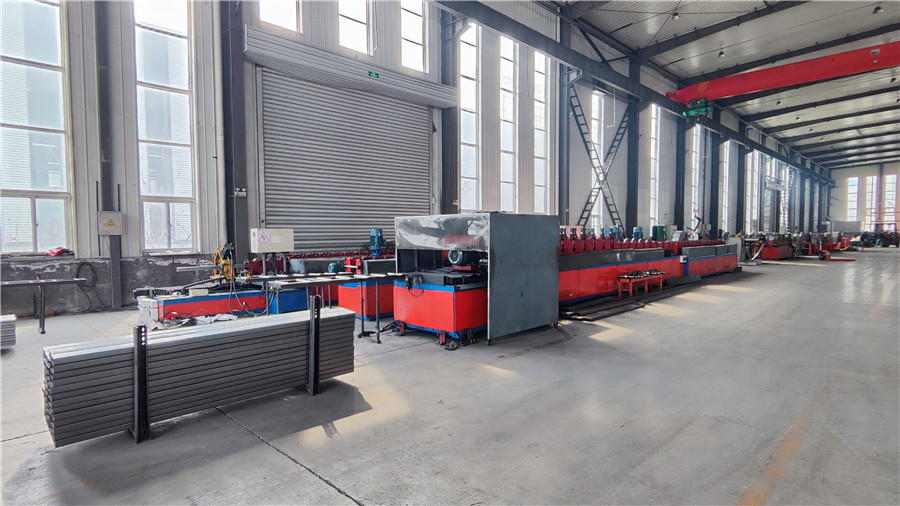
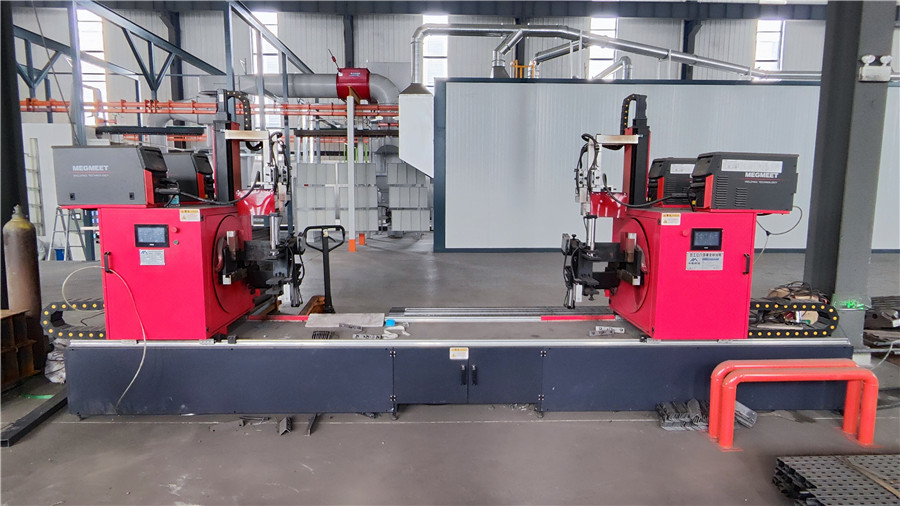
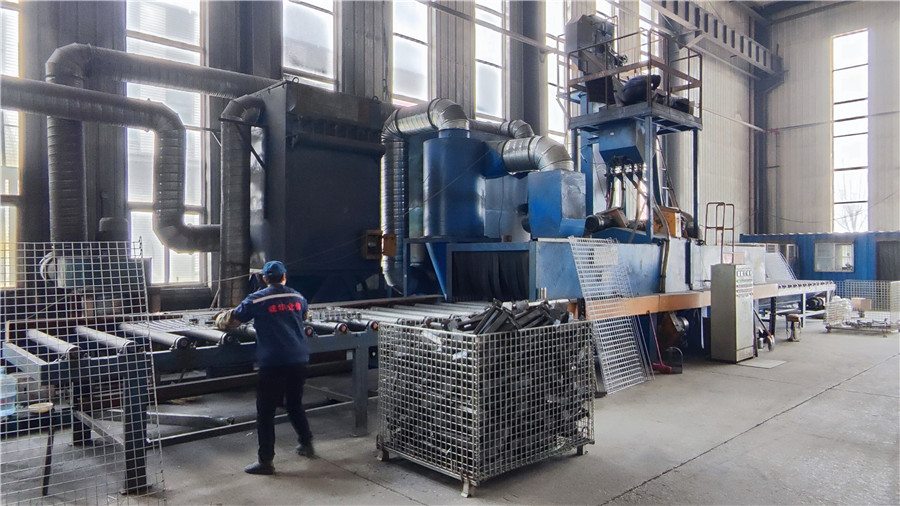
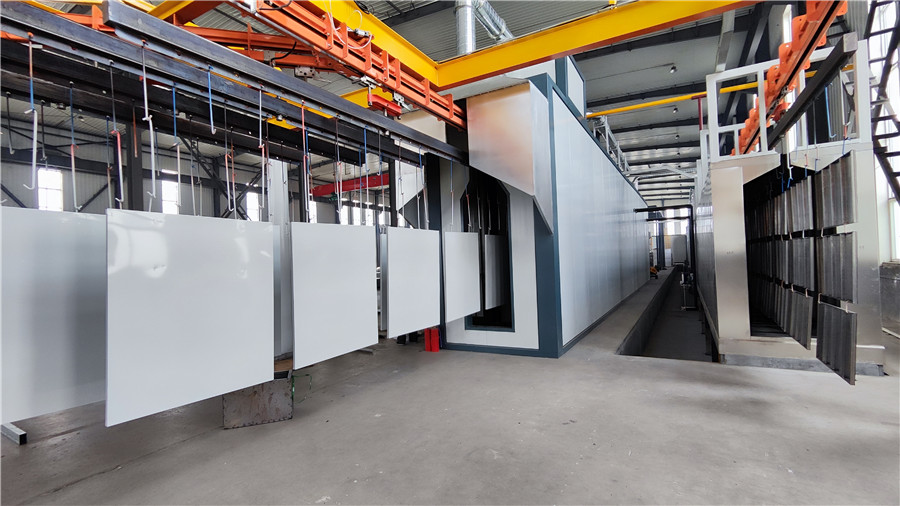
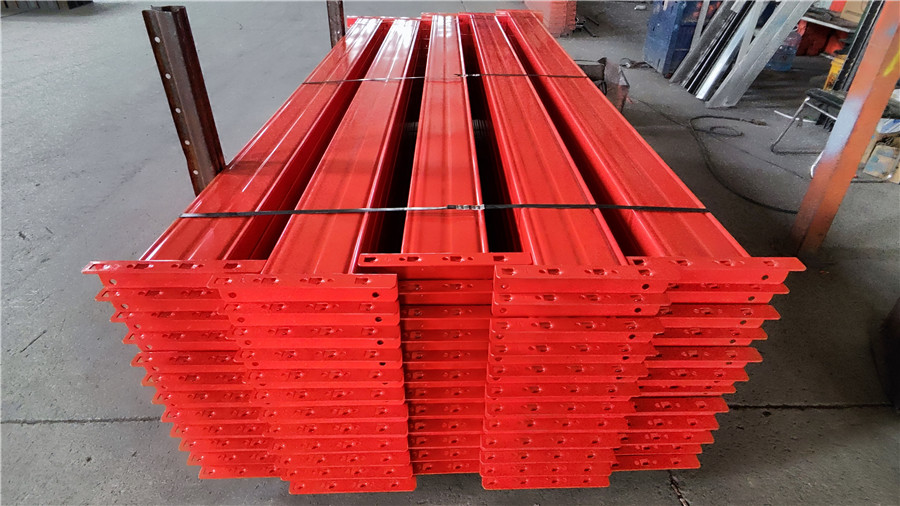
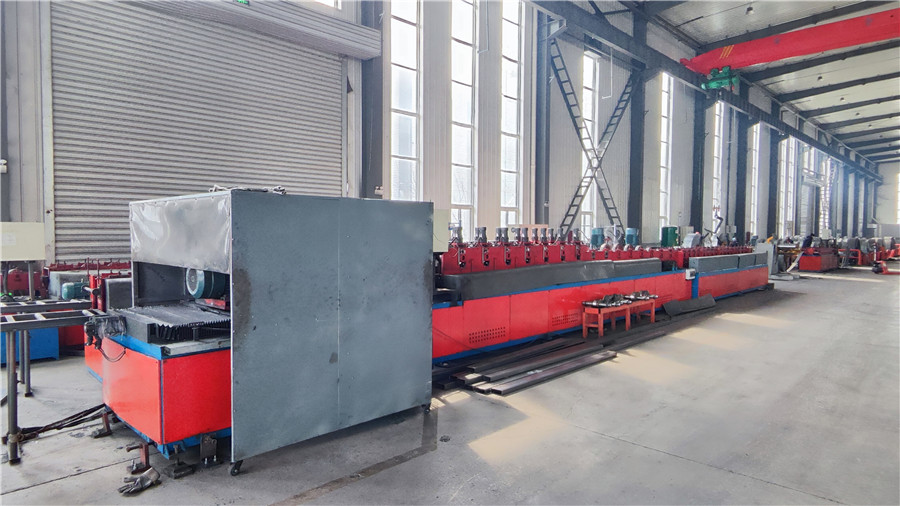
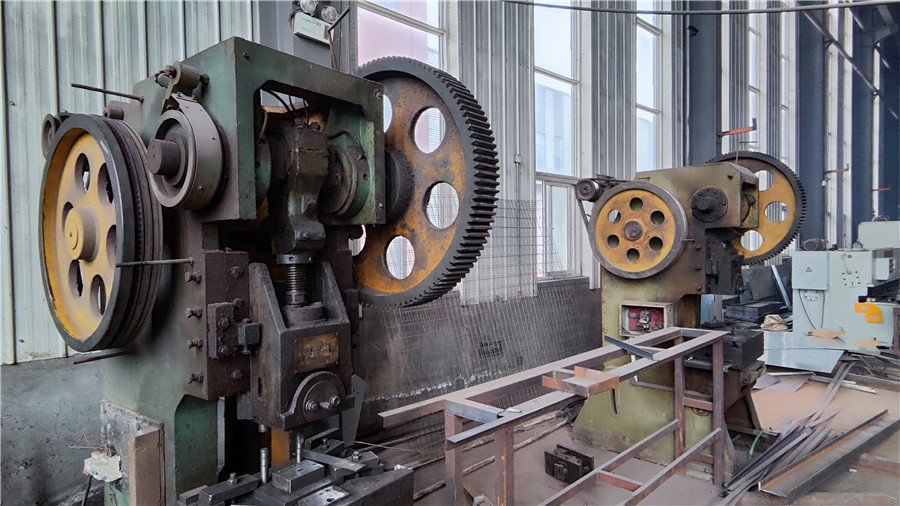
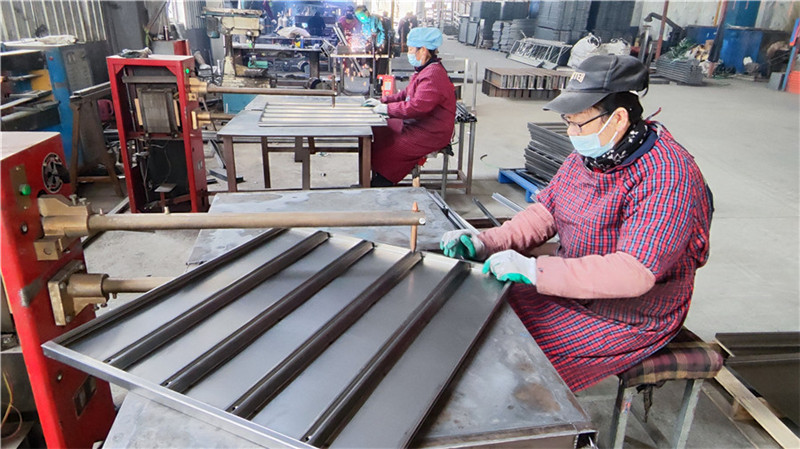
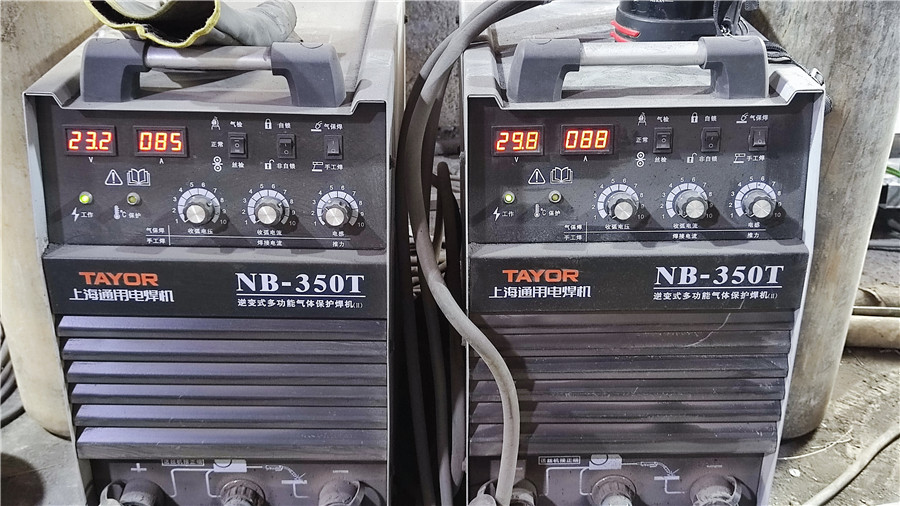
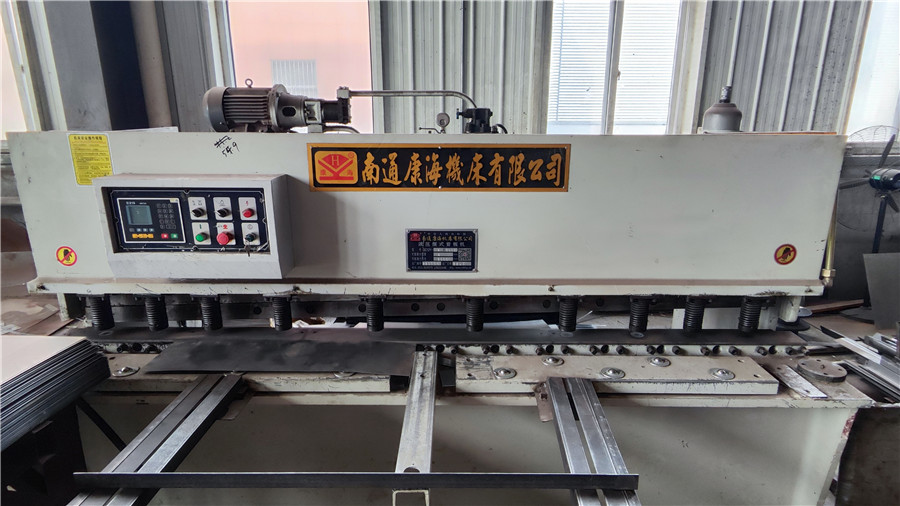
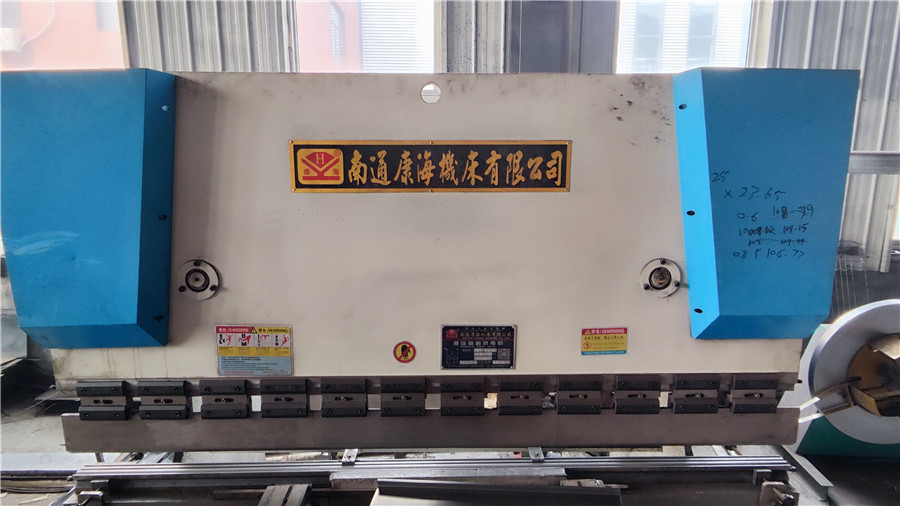
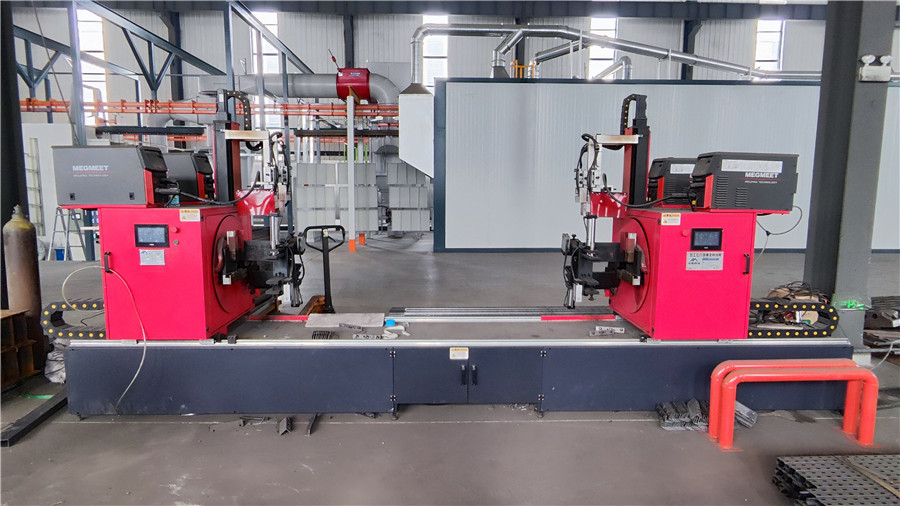
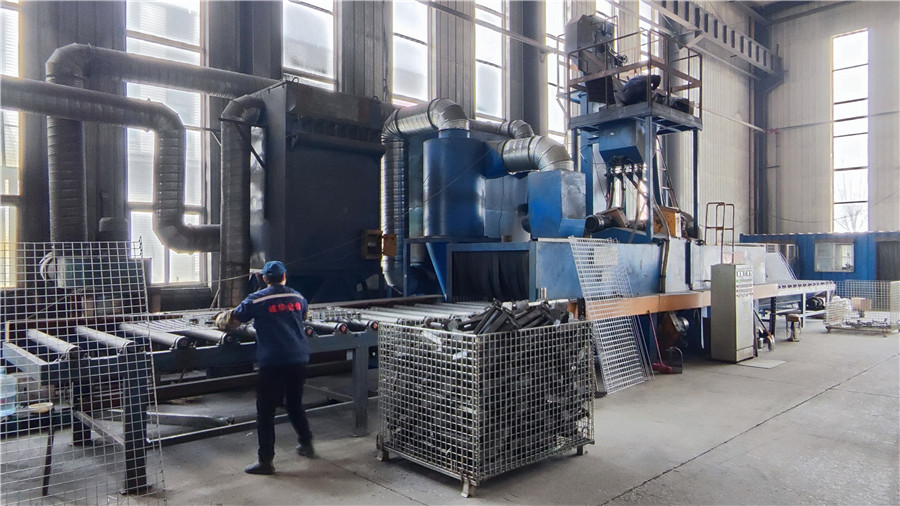
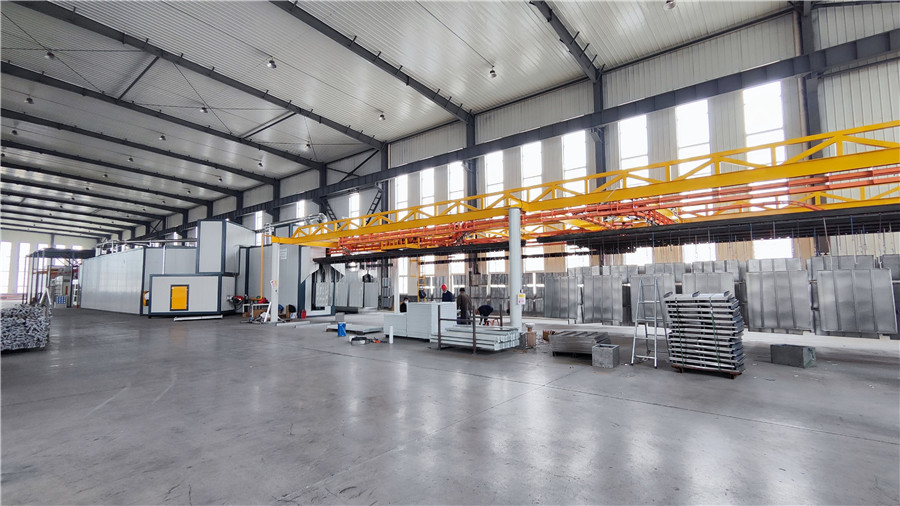
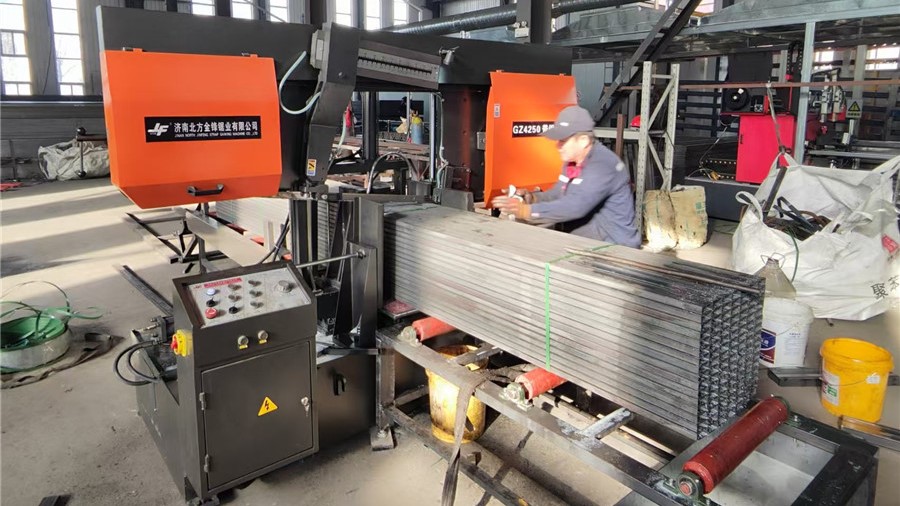
Purchasing directly from China-based manufacturers like DirectRack provides distinct structural advantages for European commercial buyers. The concentration of component manufacturing and specialized logistics in Dongguan enables rapid sourcing of premium raw materials and efficient production cycles. Integrated tooling and automated processing operations allow us to maintain lower manufacturing overheads without compromising structural tolerances. For Swedish supermarket chains undertaking store remodeling programs or rollouts, sourcing direct from the factory offers substantial cost-efficiencies over local middlemen.
Additionally, DirectRack's integrated supply chain leverages strategic partnerships with 650 supply chain partners in raw steel processing and automated coating treatments. This provides the capacity to scale production volumes rapidly to support multi-site rollouts. Our engineering team converts Swedish spatial requirements and layout concepts into detailed CAD files. Working with our technical department, clients can specify bespoke dimensional configurations, integrated wire routing, customized POS mounting points, and corporate RAL color matches. This ensures that the final equipment coordinates cleanly with existing store fixtures.
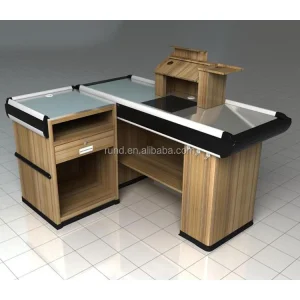
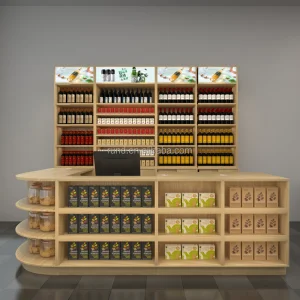
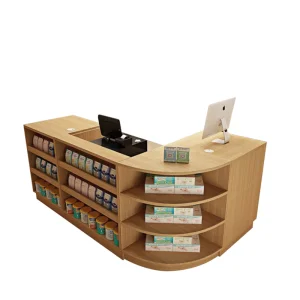
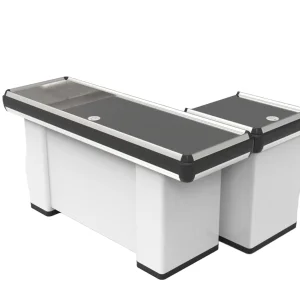
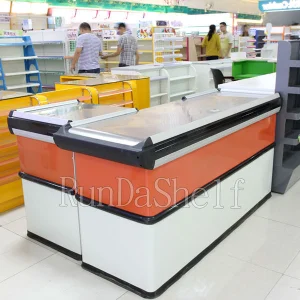
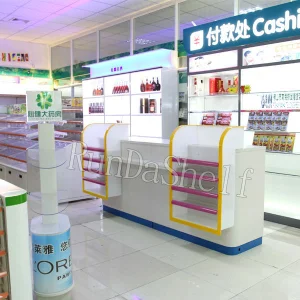
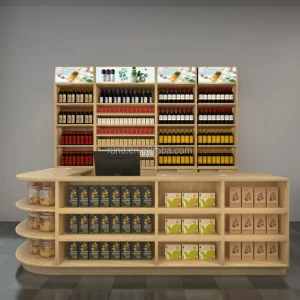
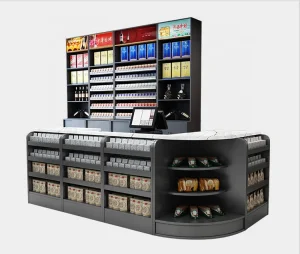
Checkout system needs vary depending on the target store format. Below is an overview of the structural configurations designed for the Swedish retail market:
Our complete product range of steel, wood, and MDF cash counters engineered for retail and supermarket applications.
The transition of northern Europe's retail landscape toward automated self-service has accelerated developments in cashier desk architecture. Modern checkouts must adapt to hybrid designs. These hybrid counters function as traditional cashier-assisted terminals during high-volume periods, and can transition into customer-facing self-checkout configurations during off-peak times. This adaptability minimizes wait times and optimizes labor efficiency.
We are also seeing increased integration of smart sensors, LED status guides, and built-in acoustic dampening panels inside checkout structures. Acoustic dampening helps lower background noise levels in busy retail environments, creating a more comfortable workspace. At the same time, clean structural designs that hide power cables, networking links, and system accessories are critical to maintaining clean lanes, improving uptime, and simplifying cleaning protocols.
 DirectRack